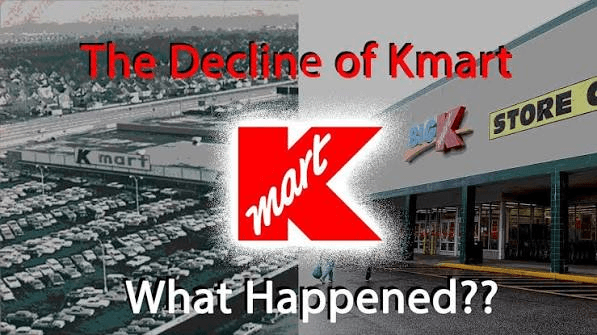

Kmart once ran more than 2,300 stores across the United States. As of early 2026, that number is down to roughly three locations — one small-format store in Miami and two in U.S. territories. So is Kmart going out of business? The short answer is: it’s not officially closed, but it’s about as close as a retailer can get without filing final paperwork.
This article covers what’s actually happening with Kmart right now — how many stores are left, where they are, what caused the collapse, who owns the brand, and whether any realistic future exists for it.
Kmart Is Not Fully Closed — But It’s Close
Let’s be precise here. Kmart has not officially shut down. The brand still exists, and a small number of locations are still open. But calling it a functioning national retailer would be a stretch.
The last full-size Kmart in the continental United States — located in Bridgehampton, New York — closed on October 20, 2024. That closure was widely reported and confirmed by multiple sources including Fox Business, Newsweek, RetailWire, and CoStar.
What remains after that closure is minimal. There is one small-format store in Miami’s Kendale Lakes neighborhood. That location isn’t even a traditional Kmart — it occupies what was formerly the garden center space of a building now largely used by At Home, a home décor retailer. There are also two stores operating in U.S. territories: one in Tamuning, Guam, and one in St. Thomas, U.S. Virgin Islands.
That’s it. Three locations across all U.S. soil and territories.
The important distinction is this: Kmart is functionally defunct as a national retailer while still technically operating a tiny handful of stores. That’s different from being officially out of business, but it’s not far off.
From 2,300 Stores to Almost None — The Collapse Timeline
The scale of Kmart’s fall is hard to overstate. In the early 1990s, the chain operated around 2,300 U.S. stores. It was a genuine powerhouse in discount retail, competing directly with Walmart and Target. Shoppers across the country knew the “Blue Light Special” announcements and the “Attention Kmart shoppers” intercom calls.
Then the unraveling began.
In 2002, Kmart filed for Chapter 11 bankruptcy and announced it would close 326 stores across 44 states and Puerto Rico as part of its restructuring. That was an early, dramatic signal that something was seriously wrong.
Over the following decade, the closures continued in waves. At one point in the mid-2010s, employees were reporting that many of the remaining roughly 941 U.S. stores were in effective liquidation phases. Over about ten years, Kmart closed around a third of its stores and saw sales drop approximately 50%.
Here’s how the final years looked:
- 2022: Only four U.S. locations remained — two in New Jersey, one in Long Island, one in Miami.
- 2023–2024: Additional closures cut that down to two U.S. locations.
- October 2024: The last full-size mainland store closes in Bridgehampton, NY.
- Early 2026: Three locations total remain across U.S. and territories.
What took decades to build collapsed in about twenty years of sustained decline.
Why Kmart Failed While Walmart and Target Did Not
This is where it gets instructive for anyone running or studying a business. Kmart’s failure wasn’t the result of one bad decision. It was a combination of competitive pressure, financial mismanagement, and deferred investment that compounded over time.
Falling Behind on Operations and Experience
Walmart and Target invested aggressively in supply chain efficiency, store layout, and eventually e-commerce. Kmart did not keep pace. Many Kmart stores felt outdated and were frequently understocked compared to competitors. Shoppers noticed, and they started going elsewhere.
Once a retailer loses the habit of a customer, it rarely gets it back.
The 2002 Bankruptcy Created a Vicious Cycle
Filing for Chapter 11 in 2002 limited the capital available for reinvestment. Stores that needed renovation didn’t get it. Technology upgrades were delayed. The stores that remained open often felt like they were running on fumes.
A struggling retailer needs to spend to compete. But financial distress makes that spending nearly impossible. Kmart got caught in that trap early and never fully escaped it.
Sears Holdings and the Asset Monetization Strategy
After Sears Holdings acquired Kmart, the strategic focus under CEO Edward Lampert shifted away from retail operations. The priority became monetizing real estate — using sale-leaseback deals to convert store equity into cash. In simple terms, Kmart sold or leased its buildings to raise money rather than using that capital to improve the stores.
That approach generated short-term cash but gutted the long-term retail operation. You can’t run a competitive retail chain while systematically liquidating the physical assets that chain depends on.
Following Sears’ own bankruptcy in 2018, both brands were folded into a company called Transformco, which has continued to manage the remaining assets.
Corporate Denial vs. What Was Happening on the Ground
One of the more telling chapters in Kmart’s story involves the gap between what leadership said publicly and what was actually happening in stores.
As closure rumors spread in the mid-2010s, Sears Holdings CEO Edward Lampert pushed back directly. He wrote in a blog post that there were no plans to close the Kmart format, calling the reports “rumor and speculation.” He framed the concern as inaccurate media coverage.
At the same time, employees at store level were telling a different story. Workers reported that many locations were operating in what looked like ongoing liquidation mode. Analysts watching the chain from outside predicted bankruptcy and exit from the market.
The contrast matters. The official message was “Kmart is not closing.” The observable reality was a chain losing stores every year, with no clear plan to reverse the trend.
For business professionals, this is a useful case study in how organizations can maintain optimistic messaging long after the operational situation has become dire. Leadership denial doesn’t stop decline — it just delays honest reckoning with it.
What Happened to the Buildings and the People
Kmart’s closure wave left a lot of empty big-box buildings behind. Some were repurposed for other retailers, divided into smaller units, or converted into warehouses and fulfillment centers. The Miami mini-store is a good example of what that looks like — the main Kmart building became an At Home store, with Kmart itself squeezed into a fraction of the original space.
The human side is worth noting too. Kmart’s origins trace back to Michigan, where S.S. Kresge opened his first store in 1899. When the last Michigan Kmart closed, it represented the complete erasure of that retail presence from the state where it started. Jobs were lost, and communities that had relied on the store — particularly in areas without many other discount shopping options — were left to adapt.
These aren’t abstract impacts. They’re the concrete, local consequences of a major retailer collapsing over time.
Could Kmart Come Back?
There’s been some online speculation about possible new concepts — including videos referencing something called “K Home” — but there is no confirmed, credible plan for a large-scale Kmart revival. Treat that speculation as exactly what it is: speculation.
Transformco, which now owns the brand, could theoretically license the Kmart name, operate small-format stores, or maintain a minimal footprint for legal or strategic reasons. Those options remain open on paper.
But realistically? Kmart returning as a major national discount chain is extremely unlikely. The market it once occupied has been taken firmly by Walmart, Target, and Amazon. The physical infrastructure is largely gone. The customer habit has been broken for years.
At First Business Mag, coverage of retail trends like this one shows a consistent pattern: legacy brands that fail to adapt don’t usually come back in their original form. They either become small niche operations, licensing vehicles, or they disappear entirely. Kmart appears to be somewhere between the first two options right now.
What This Tells Us About Retail — and Business in General
Kmart is a clear example of what happens when a large organization fails to reinvest in its core operations while better-capitalized competitors keep improving.
Walmart built a supply chain that Kmart couldn’t match. Target updated its store experience while Kmart’s locations aged. E-commerce arrived, and Kmart had neither the technology nor the financial resources to compete in that space.
The comparison to other fallen retailers is fair. Sears followed a nearly identical path. Toys “R” Us, once dominant in its category, is now a tiny brand shadow of what it was. These aren’t isolated failures — they’re examples of what happens when size and past success become substitutes for ongoing investment and honest assessment of competitive position.
The lesson isn’t complicated: a brand’s history doesn’t protect it. Execution and adaptation do.
The Bottom Line
Kmart is not officially out of business. Three locations — one small store in Miami and two in U.S. territories — are still operating as of early 2026. The brand exists. Transformco owns it.
Also Read This: