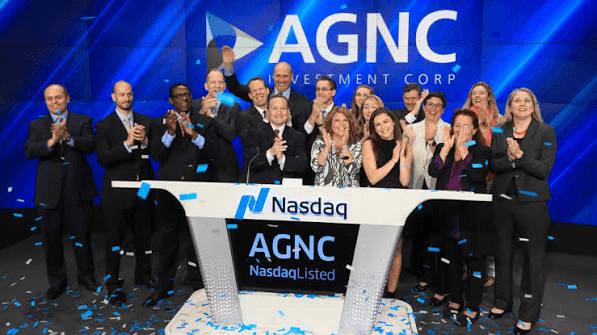

AGNC’s stock drops, the dividend gets questioned, and suddenly investors start searching “is AGNC going out of business.” It’s an understandable reaction. But a falling stock price and a company shutting down are two very different things.
This article breaks down what AGNC actually is, what its financial situation currently looks like, and how to tell the difference between real business risk and investor anxiety.
What AGNC Investment Corp. Actually Does
AGNC Investment Corp. is a mortgage real estate investment trust (REIT) headquartered in Bethesda, Maryland, and listed on NASDAQ. It invests primarily in agency mortgage-backed securities — bonds backed by government-sponsored entities like Fannie Mae and Freddie Mac.
The business model is straightforward: AGNC borrows money at short-term interest rates and invests in longer-term mortgage securities. It earns the spread between what it borrows at and what those securities pay out.
Think of it like a landlord who borrows money to buy income-producing properties. If borrowing costs rise faster than the rental income those properties generate, profit margins shrink. But the business doesn’t automatically close because of that.
AGNC still operates as an active public company. It maintains a full investor relations presence, files regular SEC disclosures, and services its shareholders. There is no indication from any credible source that it has filed for bankruptcy, initiated liquidation, or issued any formal shutdown notice.
What “Going Out of Business” Would Actually Mean for a REIT
Before drawing conclusions, it helps to be precise about what “going out of business” actually means. Most investors are conflating three very different outcomes:
- Bankruptcy or liquidation: The company cannot meet its debt obligations and formally restructures or closes through a legal process. This requires specific court filings — not just a bad earnings quarter.
- Dividend cuts: Shareholders receive less income. This is financially painful, especially for income-focused investors, but it does not mean the company has ceased to exist.
- Stock price decline: Shares lose value because investor sentiment has shifted or market conditions have changed. This reflects perception, not necessarily the company’s ability to keep operating.
Consider a simple analogy. A restaurant that has a bad quarter and cuts staff is not the same as a restaurant that locks its doors permanently. One is dealing with pressure; the other has failed entirely.
The same logic applies here. No current source confirms any bankruptcy filing, liquidation proceeding, or shutdown notice for AGNC. The concern is about pressure — not closure.
AGNC’s Current Financial Pressure — What Is Real
Being clear-eyed about this matters. AGNC does face real financial challenges, and it would be misleading to brush those aside.
In its Q4 FY2025 earnings report, released in late January 2026, AGNC posted earnings per share of $0.35. Analysts had expected somewhere between $0.37 and $0.40. That’s a miss — not a collapse, but not a number that inspires confidence either.
The primary pressure point is the interest rate environment. When short-term borrowing costs rise, AGNC’s spread income — the gap between what it borrows at and what its securities earn — gets squeezed. This is the core vulnerability of the business model.
AGNC also uses leverage, which amplifies both gains and losses. That’s not a new crisis or a recent strategic mistake. It’s a structural feature of how mortgage REITs operate. But it does mean that a shifting rate environment hits AGNC harder than it would hit a company with less debt on its balance sheet.
Analyst commentary, including coverage from Investing.com and MarketBeat, frames the situation as caution around dividend sustainability and book value — not warnings about the company shutting down. The language is “pressure” and “volatility,” not “insolvency” or “collapse.”
Why AGNC’s Dividend Gets So Much Attention
AGNC has historically offered a high dividend yield, which is exactly why it attracts income-focused retail investors. Those investors track dividend changes closely, sometimes more closely than they track the underlying business fundamentals.
As a REIT, AGNC is legally required to distribute at least 90% of its taxable income to shareholders. That makes dividend policy central to everything it does — and it’s why any earnings compression immediately raises questions about how long the current payout can be maintained.
When investors search “is AGNC going out of business,” many of them are actually asking a different question: “Will AGNC cut its dividend?” Those are two separate concerns with two separate answers.
A dividend cut signals financial pressure. It does not signal that shareholders will lose all their capital or that the company will stop operating. Plenty of solid companies have cut dividends during difficult periods and continued operating for decades afterward.
If the dividend were reduced, that would be a meaningful change for income investors. But it would not, by itself, mean AGNC is heading toward liquidation.
The Difference Between Stock Risk and Company Survival
This distinction matters more than most retail investors realize. Stock risk and business survival are not the same thing.
A weak stock price means the market is pricing in uncertainty, lower future earnings, or both. It does not mean the company is about to disappear. Stocks can trade at depressed levels for extended periods while the underlying company continues to operate, pay employees, file reports, and service its debt.
AGNC’s stock volatility is tied directly to the interest rate environment. When rates shift in ways that compress AGNC’s margins, investors reprice the stock downward. That’s the market doing its job — not a signal that AGNC’s doors are about to close.
For investors trying to make a real decision about AGNC, the right questions are more specific than “is this company going out of business?” Better questions include:
- Is the dividend sustainable at the current earnings level?
- How exposed is AGNC to further rate increases or financing cost pressure?
- How does book value hold up under current market conditions?
- What does management say about its hedging strategy?
These are the questions that actually help you assess risk — and they have answers rooted in the company’s filings and analyst reports, not in search engine speculation.
How to Evaluate AGNC Without the Noise
If you’re trying to make a practical decision about AGNC — whether to hold, exit, or avoid — here’s a straightforward approach.
First, go to primary sources. AGNC files quarterly and annual reports with the SEC. Its investor relations page is active. Read what the company actually says about its portfolio, its financing costs, and its dividend policy. Don’t rely on secondhand summaries of summaries.
Second, separate sentiment from fundamentals. Headlines about stock drops and dividend concerns are not the same as evidence of impending bankruptcy. Read analyst reports that distinguish between the two.
Third, understand what you own. AGNC is not a tech company with a product. It’s a financial company that makes money on the spread between borrowing costs and mortgage security yields. Its risk profile is directly tied to interest rate policy, not to whether its product sells well.
For more resources on evaluating business risk and investment decisions, First Business Mag covers practical financial topics for investors and professionals.
Bottom Line
AGNC Investment Corp. is not going out of business based on any available evidence. It is under financial pressure. Its earnings missed analyst expectations in Q4 FY2025. Its dividend sustainability is a legitimate question given the rate environment. Its stock has been volatile.
But none of that is the same as a company filing for bankruptcy, initiating liquidation, or shutting down operations. Those are specific legal and operational events — and none of them are happening here based on current data.
If you’re an investor in AGNC, the real work is evaluating dividend risk, rate exposure, and book value — not worrying about a closure that isn’t supported by the facts. Ask the right questions and you’ll get more useful answers than any search engine result will give you.
Also Read This: