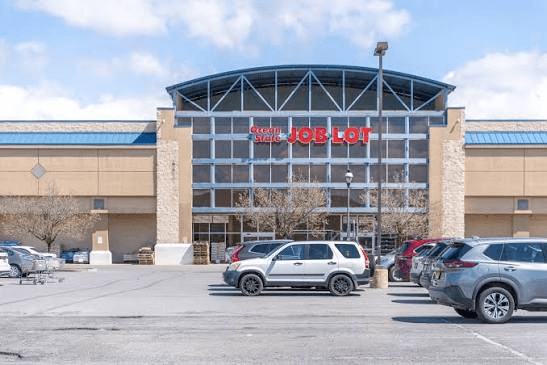

When a familiar store puts up “store closing” signs, it’s easy to assume the whole chain is in trouble. You might drive past a location, see the banners in the window, and start wondering if the entire brand is about to disappear. For Ocean State Job Lot, that assumption is wrong.
This article gives you a direct answer on whether the company is shutting down, explains why specific locations are closing, covers what the Big Lots acquisitions mean for the chain’s future, and helps you tell the difference between a single store closure and a company-wide collapse.
The Short Answer: Ocean State Job Lot Is Not Going Out Of Business
Let’s get straight to it. Ocean State Job Lot is not bankrupt. It is not liquidating. It is not closing all of its stores.
The company is headquartered in North Kingstown, Rhode Island, and continues to operate as a regional discount retail chain across the Northeast. At the time of recent press materials, the company reported 153 stores in operation.
Yes, certain individual locations have closed or are closing. But those are site-specific situations, not signs of a chain-wide collapse. There is an important difference between the two, and it matters if you want to understand what is actually happening with this retailer.
Why Certain Stores Are Closing
The store closures that have made local news all have specific, documented reasons behind them. None of them have been linked to bankruptcy, financial distress, or a company decision to pull back.
Southington, Connecticut
The Southington store closed after nearly 30 years in that location. According to reporting from Patch and WTNH, the lease was not extended because the landlord chose to take the property in a different direction. That’s a landlord decision, not a company decision.
When a lease ends and a building owner wants to do something else with the space, the tenant — no matter how established — has to move on. This happens across retail constantly.
East Springfield, Massachusetts
The Liberty Street location in East Springfield closed in March due to a lease expiration. National Today reported on the closure and framed it clearly as a local store situation, not a sign of anything happening to the broader chain.
Groton, Connecticut
The Groton location held a pre-closing sale tied to its specific property situation. Ocean State Job Lot’s own news release covered this, and nothing in that release suggested the closure was connected to financial trouble or a wider company decision.
The pattern here is consistent. Each closure has a property-level explanation: a lease ended, a landlord moved in a different direction, or a location ran its course. These are routine retail events.
One Store Closing Is Not the Same as a Chain Closing
This is a practical point worth spelling out clearly, because it’s easy to miss when you’re reading local headlines.
Retail chains open and close individual locations regularly. Leases expire. Landlords sell buildings or redevelop properties. Markets shift. A chain might close a store in one town and open two new ones in nearby towns in the same quarter. That’s just normal portfolio management.
A “store closing sale” sign refers to that specific address. It does not mean the brand is shutting down.
Think of it like a restaurant chain closing one location because the landlord sold the building. The rest of the chain keeps operating. Customers who only visited that one location might assume the whole company is gone, but that’s not what happened.
Local news headlines about a single closure can spread quickly, especially on social media, and create a false impression of a company-wide shutdown. The relevant question isn’t “is a store closing?” It’s “is the company closing stores faster than it is opening them?” In Ocean State Job Lot’s case, the answer to that second question is clearly no.
Ocean State Job Lot Is Actually Expanding in 2025
Here is where the evidence gets very clear. Companies that are failing do not sign multi-state acquisition deals. Ocean State Job Lot is doing exactly that.
In March 2025, the company agreed to acquire 15 former Big Lots stores across eight states. According to reporting from Rhode Island Inno and the Boston Business Journal, the company planned to open those new locations by mid-summer 2025. A total of 22 new locations were planned for 2025.
NJ.com also confirmed that Ocean State Job Lot was planning to take over multiple Big Lots stores in New Jersey and elsewhere. Yahoo Finance reported that the company acquired a former Big Lots location in Dansville and planned to open a new store there.
That is active, documented growth. Businesses that are heading toward closure don’t invest in new leases across eight states. They don’t plan 22 new openings in a single year. The expansion activity directly contradicts the “going out of business” narrative that shows up when a single store closes and the news spreads online.
What the Big Lots Takeover Says About Ocean State Job Lot’s Strategy
Big Lots filed for bankruptcy and closed hundreds of stores, leaving behind empty retail spaces in established shopping centers and strip malls across the country. Those vacancies don’t stay empty forever. Retailers who are in a position to grow move in to take them.
Ocean State Job Lot is doing exactly that. This is a well-known growth tactic in discount retail. When a competitor fails, the viable players pick up the best locations at favorable terms. You get an established space, existing customer traffic patterns, and often a landlord who is motivated to fill the vacancy quickly.
It’s not a sign of desperation. It’s opportunistic expansion, and it requires a company to be financially capable enough to take on new leases and fit out new stores. The fact that Ocean State Job Lot is doing this at scale — 15 stores in one deal across eight states — signals that the company has both the resources and the strategic intent to grow, not retreat.
For business owners and retail professionals, this kind of move is worth watching. Competitor failures often create real estate windows that don’t stay open long. The companies positioned to act quickly on those windows tend to come out of a shakeout period stronger than when they entered it.
For broader context on how businesses navigate these kinds of market shifts, First Business Mag covers practical business strategy and industry trends that managers and entrepreneurs can actually use.
How to Read Retail News Without Jumping to Conclusions
If you want to quickly assess whether a retailer is actually in trouble, here are a few straightforward things to check.
- Bankruptcy filings: These are public records. If a company files for Chapter 11 or Chapter 7, it will be reported by major business outlets. No such filing exists for Ocean State Job Lot.
- The reason for a closure: Is it a lease expiration or a landlord decision? Or is it tied to financial restructuring? Those are very different situations.
- New openings: Is the company still opening stores? If yes, a single closure is almost certainly a local real estate issue, not a sign of collapse.
- Company statements: Ocean State Job Lot has put out press releases about closures that explain the specific property reasons. That’s not how companies behave when they’re hiding a larger financial problem.
Reading retail news with these questions in mind will save you from making decisions — whether as a consumer, a vendor, or a competitor — based on a misleading headline.
The Bottom Line
Ocean State Job Lot is not going out of business. The company is closing specific stores in specific locations for specific, documented reasons: lease expirations and landlord decisions. At the same time, it is actively expanding by acquiring former Big Lots locations across multiple states and planning 22 new store openings in 2025 alone.
If you see a “store closing” sign at an Ocean State Job Lot near you, it means that location is closing. It does not mean the company is folding. Those are two very different things, and the evidence firmly supports only one of them.
For anyone trying to understand what is actually happening with a retailer — or any business — the habit of looking for concrete evidence rather than reacting to headlines will almost always give you a more accurate picture.
Also Read This: