
Smucker’s has been making headlines for all the wrong reasons lately. Plant closures, brand sales, a struggling Hostess division — it’s enough to make people wonder if the company is in serious trouble.
The short answer is no. But there’s enough real news here that the question makes sense. Let’s break down what’s actually happening, why Smucker’s is making these moves, and what the financial picture honestly looks like.
Smucker’s Is Not Going Out of Business
J.M. Smucker Co. is a publicly traded company that has been operating since 1897. It still runs some of the most recognized food brands in the U.S. — Smucker’s jams, Jif peanut butter, Folgers coffee, Dunkin’ (licensed), Milk-Bone, Meow Mix, and Hostess, which it acquired in 2023 for $5.4 billion.
The rumors circulating online are being driven by real events. But those events are being misread. Closing a plant is not the same as shutting down a company. Selling off a brand is not a distress sale by default. These are two very different things, and mixing them up leads to a lot of unnecessary panic.
What Smucker’s is doing is called restructuring. It’s a deliberate process of cutting costs, consolidating operations, and focusing on the parts of the business that generate the most value. It’s not liquidation. It’s not bankruptcy. It’s a common move for large consumer packaged goods companies navigating slow growth and margin pressure.
The Plant Closures That Started the Rumors
There have been several real facility closures over the past few years, and they’re worth walking through clearly.
The Indianapolis Plant (2025)
In 2025, Smucker’s announced it would close its Indianapolis manufacturing facility, which produces Hostess sweet baked snacks. The target closure date is early 2026. The company expects this move to save roughly $30 million per year.
This is a cost-cutting decision tied directly to the underperforming Hostess division. Production isn’t disappearing — it’s being consolidated elsewhere. Hostess snack cakes are still part of Smucker’s long-term strategy, even if the division is currently struggling.
Ripon, Wisconsin and the Orrville Retail Store
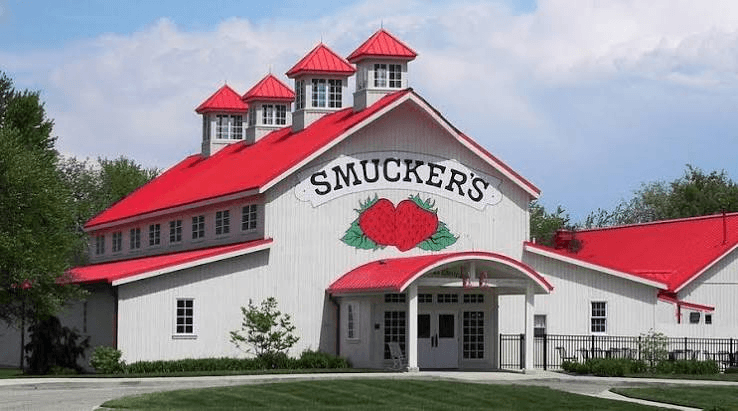
Smucker’s also closed and sold its Ripon, Wisconsin manufacturing facility, shifting that work to its Orrville, Ohio operations. And it shut down its only branded retail store — also in Orrville — donating the building and land to the Akron-Canton Regional Foodbank.
The retail store closure sounds dramatic, but most consumers never interacted with it. Smucker’s products reach people through grocery stores, not a single branded shop in Ohio. Closing it has no impact on what shows up on supermarket shelves.
Earlier Closures
This isn’t the first round of closures either. Smucker’s previously shut down fruit spreads plants in Memphis, Tennessee and Ste. Marie, Quebec, along with coffee plants in Sherman, Texas and Kansas City, Missouri. Those closures were part of a multi-year restructuring plan that targeted around $60 million in annual savings and included a $220 million investment in coffee and fruit spreads production.
Here’s the key point: those earlier closures happened, the savings were captured, and the company kept running. The same logic applies now.
Why Smucker’s Has Been Selling Off Brands
Beyond plant closures, Smucker’s has also been trimming its brand portfolio. This is where some of the “going out of business” confusion really takes hold — but again, the reasoning is straightforward once you understand how large food companies operate.
The Juice and Grains Sale
Smucker’s sold its natural and organic beverage and grains businesses — including R.W. Knudsen, TruRoots, and a Santa Cruz Organic beverage licensing agreement — to Nexus Capital Management for $110 million. The sale also included related production facilities in California and Maryland.
These were niche, lower-margin product lines that didn’t fit the core strategy. Selling them frees up capital to put toward bigger, more profitable categories like coffee, peanut butter, and pet food.
The Baking Business Sale
Before that, Smucker’s sold its U.S. baking business — which included Pillsbury, Robin Hood, and Martha White — to Brynwood Partners for $375 million. Reports before the deal closed estimated the unit could be worth around $700 million, so the final price reflects the reality of what buyers would actually pay.
Think of this the way you’d think about a business owner who drops a side product line to focus on their main revenue driver. It’s not desperation. It’s prioritization. Large CPG companies regularly prune their portfolios — that’s how they stay competitive in the categories that actually matter to them.
The Hostess Problem Is Real, But It’s One Division
Here’s where Smucker’s deserves honest scrutiny. The Hostess acquisition is not going well, and downplaying that wouldn’t be accurate.
Smucker’s paid $5.4 billion for Hostess Brands in 2023. That’s a large bet on the snack cake category. Some analysts have described the deal as starting to look like a disaster, citing overpayment concerns and significant integration difficulties.
The numbers back up the concern. In a recent quarter, the Sweet Baked Snacks division saw sales fall 19% to $256.1 million. Even when you strip out the divested portions, the division still slipped 3%. Profits dropped nearly 70%. That’s a serious performance problem.
The Indianapolis plant closure is a direct response to those numbers. Smucker’s is trying to cut costs in the Hostess segment to protect margins while it works through the integration.
But a struggling division is not the same as a failing company. Smucker’s still has Jif, Folgers, Dunkin’-licensed coffee, Milk-Bone, Meow Mix, and its core fruit spreads business. Hostess is one piece of a much larger operation. The question going forward is whether Smucker’s can stabilize that division — not whether the whole company is going under.
What the Financial Picture Actually Signals
Analysts generally view Smucker’s as a mature food company dealing with slow growth, margin pressure, and the messiness of a large acquisition that hasn’t delivered yet. That’s a real challenge, but it’s a far cry from a company heading toward collapse.
The pattern of divestitures and restructuring reflects an attempt to build a tighter, higher-margin portfolio. Sell what’s not working. Cut costs where you can. Invest in the categories with better long-term returns. That’s the strategy.
For context on how this plays out, look at the earlier restructuring cycle. Smucker’s closed four plants, invested $220 million in its core production infrastructure, and captured $60 million in annual savings. The company didn’t disappear. It came out leaner.
Whether the Hostess bet ultimately pays off is a legitimate open question. But right now, there’s no evidence of existential financial risk — no bankruptcy filings, no creditor pressure, no indication that flagship brands like Jif or Folgers are at risk.
For more coverage of how established companies navigate restructuring and strategic pivots, First Business Mag tracks business moves across major industries.
What This Means for Consumers and Employees
If you’re a consumer, your Smucker’s jam, Jif peanut butter, and Folgers coffee are not going away. The restructuring doesn’t affect those products. You might eventually see minor changes — packaging, size, pricing — but that’s normal product management, not a sign of crisis.
If you work at one of the affected facilities, the picture is harder. Plant closures mean real job losses in real communities. The Indianapolis closure, the Ripon closure, and the earlier round of shutdowns all had direct impacts on workers and local economies. That’s worth acknowledging plainly, separate from the question of corporate health.
The donation of the Orrville retail store to a food bank is a small gesture, but it does show Smucker’s trying to manage community relations alongside the business decisions. It doesn’t change the reality of the job losses at other facilities.
The Bottom Line
Smucker’s is restructuring, not shutting down. The plant closures, brand sales, and Hostess struggles are all real — but they reflect a company trying to cut costs and focus its portfolio, not one preparing to close its doors.
The Hostess division is the most legitimate concern right now. A $5.4 billion acquisition that’s delivering 70% profit drops and double-digit sales declines is a serious problem that management needs to solve. Investors and analysts are right to watch it closely.
But Smucker’s core business — coffee, peanut butter, pet food, fruit spreads — remains intact. The company has gone through restructuring cycles before, captured savings, and continued operating. Based on current evidence, that’s the more likely trajectory here too.
If you see headlines about another Smucker’s plant closing or brand sale, ask the same questions: Is this a sign of broad financial failure, or is it a targeted cost-reduction move? Almost every time, it’s the latter.
Also Read This: