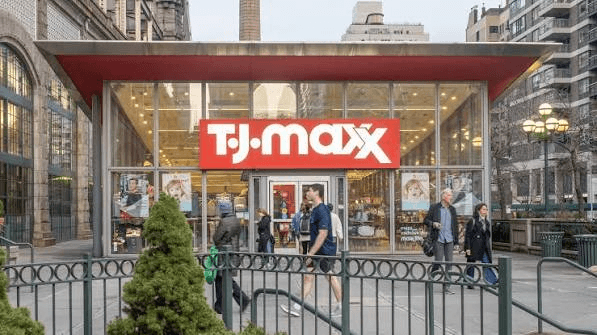

A TikTok video recently claimed that all T.J. Maxx stores would close worldwide on September 23, 2025. Shoppers panicked. Posts spread fast. The claim is completely false — but the confusion makes sense, because real store closures have been happening.
This article breaks down what the viral rumor actually said, which specific stores have closed and why, what T.J. Maxx’s parent company looks like financially, and how you can check on your local store.
The Viral Rumor About T.J. Maxx Closing All Stores
Social media posts — including TikTok videos — spread a specific claim: T.J. Maxx would shut down every location worldwide on September 23, 2025. It sounded alarming. It was also made up.
Neither T.J. Maxx nor its parent company, TJX Companies, made any such announcement. Fact-checkers looked into it and found no basis for the claim. RHCJC News directly debunked it, confirming the September 2025 global closure story is false.
This kind of rumor usually starts when a news story about one or two store closures gets stripped of context and shared as something bigger. Someone sees a headline about a T.J. Maxx closing, assumes it means all stores, and the post takes off. That’s likely what happened here.
The bottom line: there was no mass shutdown announcement. There is no closing date for the whole chain.
Which T.J. Maxx Stores Actually Closed — and Where
That said, individual store closures are real. Several locations shut down in late 2025 and early 2026. Here’s what actually happened:
- Newbury Street, Boston: This location, which had been open since 2016 inside a Frank Gehry-designed building, closed in early 2026. TJX notified the state that 117 employees would be terminated effective January 5, 2026.
- Silver Spring, Maryland (Ellsworth Place mall): This store closed permanently on January 3, 2026, after roughly ten years of operation.
- Bronx, NY — 610 Exterior Street (Marshalls): Closed in early January.
- Brooklyn, NY — 503 Fulton Street (T.J. Maxx): Closed in early January.
- Chicago — 1008 S. Canal Street (T.J. Maxx): Closed in early January.
These are confirmed, specific closures. They are not part of a chain-wide retreat. They are individual locations that TJX decided to close — for reasons that are pretty standard in retail.
Why These Stores Closed — Real Estate, Not Collapse
When asked about the Boston Newbury Street closure, TJX pointed to a reassessment of its real estate strategy. That’s the company’s explanation — not a sign of financial trouble, but a decision about where it makes sense to operate.
The Silver Spring closure tells a similar story. That store shut down after ten years, but a newer T.J. Maxx had already opened in Burtonsville, Maryland in March 2024 — about ten miles away. The brand didn’t leave the market. It repositioned within it.
This is normal retail behavior. Leases expire. Foot traffic shifts. A nearby store can make an older location redundant. When that happens, closing the older store isn’t a crisis — it’s just practical portfolio management.
In the Bronx, Brooklyn, and Chicago, multiple other T.J. Maxx and Marshalls locations stayed open after those closures. The brand didn’t exit those cities. It just closed one address in each.
Think of it like a restaurant chain closing one branch because the rent got too high or a new location nearby is performing better. That’s not the chain going under. It’s the chain making a business decision. The same logic applies here.
What TJX’s Financials Actually Show
If T.J. Maxx were heading toward collapse, you’d expect to see it in the numbers. You don’t.
TJX Companies — which owns T.J. Maxx, Marshalls, HomeGoods, and other banners — reported higher earnings in the first half of 2025 compared to the same period in 2024. The company is not contracting. According to reporting based on Nasdaq data, TJX has long-term plans that could include opening as many as 1,800 new stores.
That’s not the trajectory of a company going out of business. A business on the edge of collapse doesn’t plan for nearly two thousand new locations.
Discount and off-price retailers like T.J. Maxx also tend to hold up well when other retailers struggle. When consumers feel squeezed financially, they look for deals — and that’s exactly what T.J. Maxx sells. That dynamic has worked in TJX’s favor during tougher economic periods.
Closing a handful of underperforming or strategically misaligned stores while the overall company grows is not a warning sign. It’s what healthy retail operations do to stay efficient.
What This Means If You Work in Retail or Manage a Business
For anyone running a business or managing retail operations, the T.J. Maxx situation is a useful case study in a few things.
First, store closures and business failure are not the same thing. Large chains regularly close locations that no longer make financial sense. That’s disciplined management, not distress.
Second, real estate decisions drive a lot of retail footprint changes. Leases, foot traffic patterns, nearby competition, and market shifts all factor in. TJX’s repositioning from Silver Spring to Burtonsville is a clean example of this.
Third, social media rumors can move faster than facts. The September 2025 global closure rumor spread widely despite having no factual basis. For businesses, this is a reminder of how quickly misinformation can create real customer concern — and why clear, direct communication matters when actual changes are happening.
For more practical business coverage like this, check out First Business Mag, which covers retail, operations, and business news in straightforward terms.
How to Check If Your Local T.J. Maxx Is Staying Open
If you’re worried about a specific store near you, the most reliable way to check is through the official T.J. Maxx store locator on their website. If a store is closing, you’ll often see signage in the store itself advertising closing sales and discounts on remaining inventory.
Local news outlets are also a good source. Closures like the Silver Spring and Boston locations were covered by local media well before the actual closing dates, giving shoppers and employees advance notice.
What you should not rely on: TikTok videos, unverified social media posts, or screenshots without a clear source. The September 2025 rumor is a good example of how those can mislead people.
The Short Answer
T.J. Maxx is not going out of business. The viral claim about a worldwide shutdown on September 23, 2025 was false, and fact-checkers confirmed it.
Real store closures did happen — in Boston, Silver Spring, the Bronx, Brooklyn, and Chicago. Those closures reflect real estate decisions and portfolio adjustments, not a company in financial trouble.
TJX Companies reported earnings growth in the first half of 2025 and has long-term expansion plans on the table. That’s not what a failing business looks like.
If your local store is closing, that’s a genuine loss for your community — and for the 117 Boston employees who lost their jobs, it’s a real hardship. But it doesn’t mean the chain is collapsing. It means one location, in one market, no longer fit the company’s strategy. Those are two very different things.
Also Read This: