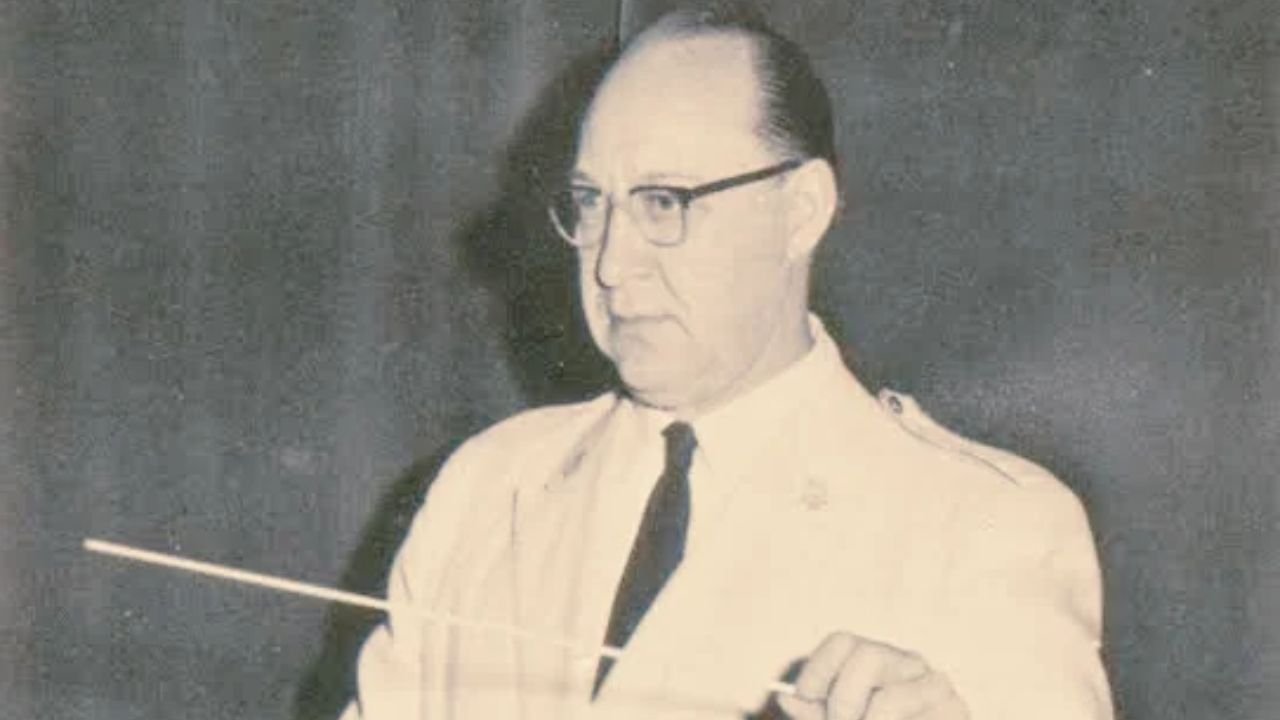

| Full name | Lawrence Peter Fogelberg |
|---|---|
| Born | March 11, 1911, Chicago, Illinois |
| Died | August 5, 1982 |
| Nationality | American |
| Profession | Music educator, band director, musician |
| Known for | Directing school and university bands in Illinois; inspiring Dan Fogelberg’s “Leader of the Band” |
| Spouse | Margaret Young Irvine |
| Children | Marc Lawrence, Peter Kent and Daniel Grayling Fogelberg |
| Relationship | Father of Dan Fogelberg |
Lawrence Peter Fogelberg spent more than three decades teaching music, directing school bands and serving Illinois communities he called home. He was not a recording artist or a public figure by conventional measure. He was a working music educator — the kind who runs rehearsals after school, shows up at football games with a baton and gives private lessons on weekday evenings. His son, singer-songwriter Dan Fogelberg, made sure that work was not forgotten. The 1981 song “Leader of the Band” was written directly about Lawrence, and it became one of the most recognized tribute songs in American popular music.
Who Was Lawrence Peter Fogelberg?
Lawrence was born on March 11, 1911, in Chicago. He attended DeKalb High School and went on to study at Northern Illinois University before earning a master’s degree from Northwestern University. Music was not just a subject for him — it was a vocation he pursued across multiple institutions and community settings over the course of his professional life.
He served in a military orchestra during the World War II era, an experience that fit naturally into a career already shaped by ensemble work and conducting. After the war, he settled into Illinois school music, where he would remain for decades.
In 1976, Phi Beta Mu, the international school bandmasters fraternity, recognized him as Bandmaster of the Year through its Xi Chapter — a professional acknowledgment from peers in the same field he had devoted his career to.
A Career in Illinois School Bands and Community Music
Lawrence’s Illinois teaching career is well documented in its broad outlines. From 1945 to 1955, he directed the band at Woodruff High School in Peoria. He then moved to Pekin Community High School, where he led the band program from the mid-1950s until his retirement in 1976 — roughly two decades at a single institution.
During that same period, from 1951 to 1959, he also directed the Bradley University band at football and basketball games, extending his work beyond the high school setting without leaving it. He was connected throughout this time to the Pekin Municipal Band, which performed public summer concerts for the local community.
Private lessons rounded out his practice. Like many music educators of his generation, Lawrence did not limit his teaching to school hours or school buildings. He gave individual instruction alongside everything else — the kind of steady, unglamorous work that characterizes a career built on craft rather than profile.
The Fogelberg Family
Lawrence married Margaret Young Irvine on April 20, 1946, in Peoria. Margaret was herself a music instructor in Peoria public schools at the time they met, which means music was genuinely the common ground of the household, not simply a father’s hobby or a son’s lucky inheritance.
Together, Lawrence and Margaret had three sons: Marc Lawrence, Peter Kent and Daniel Grayling Fogelberg. Lawrence’s parents were Otto and Minnie Fogelberg, and the family line traces back to Swedish immigrant ancestry through Lawrence’s grandfather, Peter Fogelberg.
Dan Fogelberg was the youngest of the three brothers. By his own account, his father was the central musical influence in his life — not in an abstract sense, but in the practical sense of growing up in a household where music was taught, practiced and conducted as serious work.
The Father Behind “Leader of the Band”
“Leader of the Band” was released in 1981 as part of Dan Fogelberg’s album The Innocent Age. Dan wrote it as a direct tribute to his father, and the song’s lyrics are specific enough that listeners familiar with Lawrence’s career could recognize the details: a life spent conducting school bands, teaching music and passing that knowledge on to students and, eventually, to a son who took it in a different direction.
The song describes Lawrence’s profession — conductor, teacher, bandmaster — rather than simply his role as a parent. That specificity was intentional. Dan credited his father repeatedly in interviews as the person who gave him his musical foundation, and “Leader of the Band” was the most public expression of that acknowledgment.
Lawrence was alive when the song was released and when it climbed the charts in late 1981 and into 1982. The attention brought him a kind of public recognition he had not sought during his working years, and he gave interviews as the song drew interest in his story. It was, by most accounts, a meaningful period — a son’s tribute arriving while the father was still there to receive it.
Coverage of the song’s origins appeared in outlets including Parade and Newsweek, both of which traced the song back to Lawrence’s specific career as an Illinois school band director. For readers interested in more about Dan Fogelberg’s life and music, First Business covers a range of profiles on figures across American cultural and professional life.
Lawrence Fogelberg’s Later Years and Death
Lawrence retired from Pekin Community High School in 1976, the same year Phi Beta Mu named him Bandmaster of the Year. He had spent more than thirty years in Illinois music education by that point, with Pekin representing the longest chapter of his career.
He died on August 5, 1982 — only months after “Leader of the Band” had reached wide audiences and become a major hit. The timing gave his life an elegiac quality that the song itself had not quite anticipated: a tribute written while the subject was alive, becoming a permanent public record just before he was gone.
Lawrence Peter Fogelberg did the work that music educators do — directing rehearsals, leading bands onto football fields, giving private lessons, building programs year after year in schools that needed someone willing to do it. He was recognized for it during his lifetime, by his profession and by his son. “Leader of the Band” has outlasted him by more than four decades now, but the man behind the song was real: a Chicago-born bandmaster who gave the communities of Peoria and Pekin more than thirty years of his professional life, and who gave his youngest son the musical language to describe it.
Sources
- Pekin Public Library — “Leader of the Band: Lawrence Fogelberg”
- Dan Fogelberg Official Website — “Forefathers”
- Parade — “1981 Folk Rock Hit Became a Heartfelt Thank-You to a Father”
- Newsweek — “A Song for the Ages: How Dan Fogelberg’s ‘Leader of the Band’ Came to Be”
- Phi Beta Mu Xi Chapter — Lawrence Fogelberg