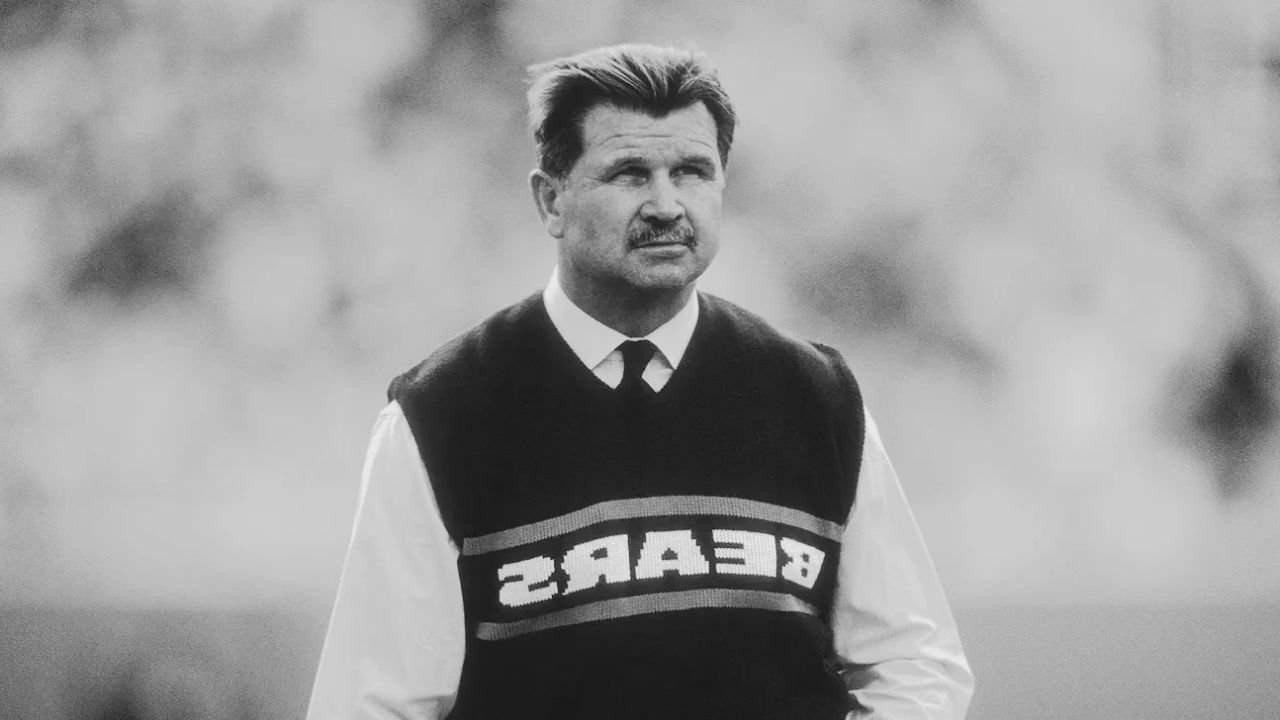

| Full name | Michael Keller Ditka |
|---|---|
| Known as | Mike Ditka; “Iron Mike”; “Da Coach” |
| Born | 1939, Carnegie, Pennsylvania |
| Died | October 9, 2026, age 86 |
| Nationality | American |
| Profession | NFL player, head coach, television analyst |
| Known for | Pioneering the tight end position; coaching the 1985 Chicago Bears to Super Bowl XX |
| Spouses | Marge Ditka (m. 1961–1973); Diana Ditka (m. 1977–2026) |
| Children | Michael Ditka III, Mark Ditka, Megan Ditka, Matthew Ditka |
Mike Ditka occupies a place in NFL history that almost no one else can claim. He was a dominant player at a position he helped define, and then he returned to the same franchise that drafted him and coached it to one of the most celebrated championships the league has ever seen. That combination — Hall of Fame player and Super Bowl-winning head coach, both with the Chicago Bears — is what separates Ditka from nearly every other figure in professional football.
He died on October 9, 2026, at age 86. His family announced his death, and no cause was publicly stated.
From Carnegie, Pennsylvania to the University of Pittsburgh
Ditka was born Michael Keller Ditka in Carnegie, Pennsylvania, a small borough just southwest of Pittsburgh. Growing up close to the city shaped both his toughness and his football ambitions. He stayed local for college, playing at the University of Pittsburgh, where he developed into one of the best tight ends the college game had produced.
His college career peaked in 1960 when he earned consensus All-American honors — a recognition that signaled to NFL scouts that they were looking at an elite prospect. By the time the 1961 NFL Draft arrived, Ditka was among the most coveted players available.
Redefining the Tight End Position in the NFL
The Chicago Bears selected Ditka with the first overall pick in the 1961 NFL Draft. That kind of top billing came with expectations, and he met them immediately. As a rookie, he caught 56 passes for 1,076 yards and 12 touchdowns — numbers that would stand out in any era but were genuinely extraordinary for a tight end in the early 1960s. He was named NFL Rookie of the Year.
The significance of those numbers requires some context. Before Ditka, tight ends were primarily blockers. Teams used them to protect the quarterback and open running lanes, not to stretch defenses or rack up receiving yards. Ditka did all of that and caught passes at a level that changed what coaches and fans expected from the position. His combination of physicality and receiving ability was something the NFL had not seen from a tight end.
He played six seasons with Chicago, earning four consecutive All-NFL selections from 1961 through 1964 and five Pro Bowl appearances. He was part of the 1963 Chicago Bears team that won the NFL Championship — the franchise’s last title before the Super Bowl era. After his time with the Bears, he spent two seasons with the Philadelphia Eagles before finishing his playing career with four seasons on the Dallas Cowboys.
With Dallas, he added another championship to his résumé when the Cowboys won Super Bowl VI, played in January 1972. By the time he retired, Ditka had compiled 427 receptions for 5,812 yards and 43 touchdowns across 12 NFL seasons. He earned two first-team All-Pro selections and made five Pro Bowls.
Pro Football Hall of Fame Induction
In 1988, Ditka was inducted into the Pro Football Hall of Fame in Canton, Ohio. The distinction carried particular weight: he was recognized as the first tight end ever inducted into the Hall, a fact that underscored just how much he had elevated the position. The honor arrived while he was still very much in the public eye as the Bears’ head coach, which meant he was simultaneously a coaching figure and a playing legend — an unusual combination for any athlete.
His induction reflected not just his statistics but his broader influence. The tight ends who came after Ditka — players who contributed as both receivers and blockers at the highest level — owe part of their position’s identity to what he demonstrated in the 1960s.
Coaching the Chicago Bears and the 1985 Championship Season
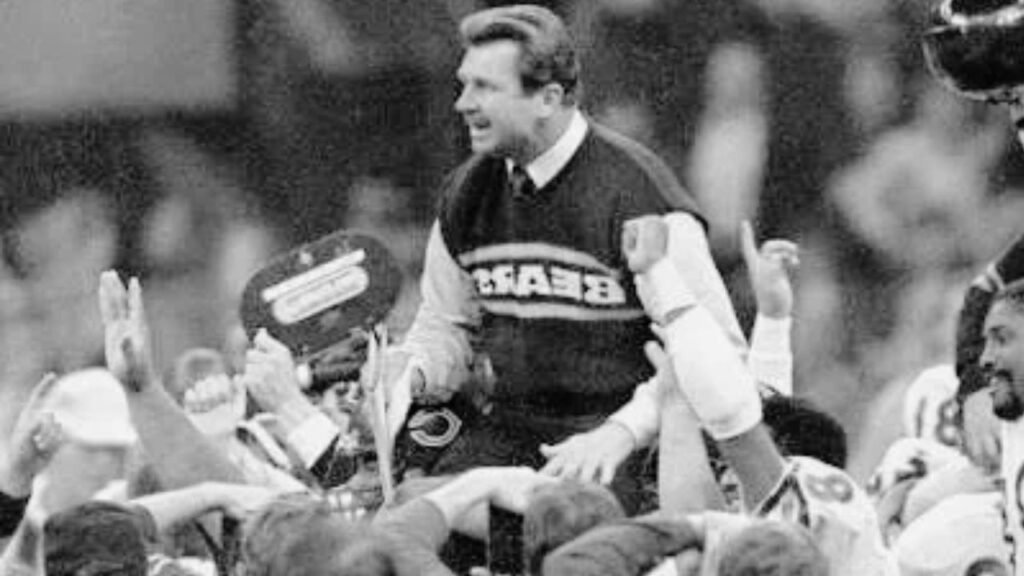
Ditka became head coach of the Chicago Bears in 1982, returning to the organization that had drafted him more than two decades earlier. The early years of his tenure were a rebuild, but the team came together quickly. By 1985, the Bears had become something close to unstoppable.
That 1985 season remains one of the most discussed in NFL history. Chicago went 15–1 in the regular season, a record that reflected just how thoroughly they dominated opponents. The Bears defense, already historically formidable, was complemented by an offense that controlled games from start to finish. They rolled through the playoffs and defeated the New England Patriots 46–10 in Super Bowl XX, played in January 1986. The margin of victory still stands as one of the most lopsided outcomes in Super Bowl history.
Ditka was named AP NFL Coach of the Year in both 1985 and 1988, recognizing not just the championship season but the sustained quality of his coaching. He led Chicago through 1992, finishing a tenure that spanned more than a decade with the franchise.
He later coached the New Orleans Saints from 1997 to 1999, though that stint did not produce comparable results. His coaching legacy is inseparable from the 1985 Bears and what that team accomplished.
A Player, Assistant Coach and Head Coach Who All Won the Super Bowl
One of the most frequently cited facts about Ditka is that he won a Super Bowl in multiple roles: as a player with the Cowboys, as an assistant coach, and as a head coach with the Bears. Very few people in NFL history have accomplished that across all three capacities, and it is widely noted as one of the things that sets his career apart from other coaching and playing legends.
It is a distinction that speaks to how long and how successfully he operated at the highest level of the sport — spanning different eras, different teams and entirely different responsibilities on the field.
Beyond the Sideline — Broadcasting and Public Persona
After his coaching career wound down, Ditka moved into television work as a football analyst. He remained a recognizable and outspoken presence in sports media, the kind of commentator who did not hedge or soften his opinions. His Chicago association never faded, and the nickname “Da Coach” stuck as a reflection of how thoroughly he was identified with that city and that franchise.
He became more than a football figure over the decades — someone whose image appeared in advertising, whose opinions were sought on matters well beyond the game, and whose personality made him a broader cultural presence. For many fans who never saw him play, Ditka was simply the coach of the 1985 Bears and the forceful television voice who followed.
Sports business coverage, including profiles featured on First Business Mag, often cited Ditka as an example of how a strong athletic brand could extend well beyond a playing or coaching career into lasting public recognition.
Ditka’s Wives and Children
Ditka married Margery “Marge” Dougherty in 1961, the same year he entered the NFL. The couple had four children together: Michael Ditka III, Mark Ditka, Megan Ditka and Matthew Ditka. Their marriage ended in divorce in 1973.
In 1977, Ditka married Diana Trantham, who became Diana Ditka. They remained married for the rest of his life. His family’s announcement of his death described him as a husband, father and grandfather, though the number and names of his grandchildren were not made public in the immediate reporting.
Marge Ditka, his first wife and the mother of his four children, was part of his life during the years that bridged his playing career and the early stages of his coaching path.
A Legacy Built Across Both Sides of the Field
Mike Ditka died on October 9, 2026, at 86. By the time of his death, he had spent more than six decades as one of the most recognizable names in American football — first as the tight end who showed what the position could be, then as the coach who brought a championship back to Chicago, and finally as the outspoken analyst who never really left the game.
The 1985 Bears will likely remain the first thing most people associate with his name, and that is not a diminishment. That team was special, and Ditka was central to what it became. But the fuller picture is of someone who shaped the NFL at multiple levels across multiple decades — a distinction that very few people in the sport’s history can honestly claim.
Sources
- Pro Football Hall of Fame player biography for Mike Ditka
- NFL obituary: Mike Ditka dies at age 86
- ESPN obituary: Legendary coach and Hall of Fame tight end Mike Ditka dies at 86
- NBC News: Mike Ditka, Chicago Bears coach, dies at 86
- People: Mike Ditka, legendary NFL player and Chicago Bears coach, dies at 86
- Associated Press: Mike Ditka, the quintessential Chicago Bear and Pro Football Hall of Famer, dies