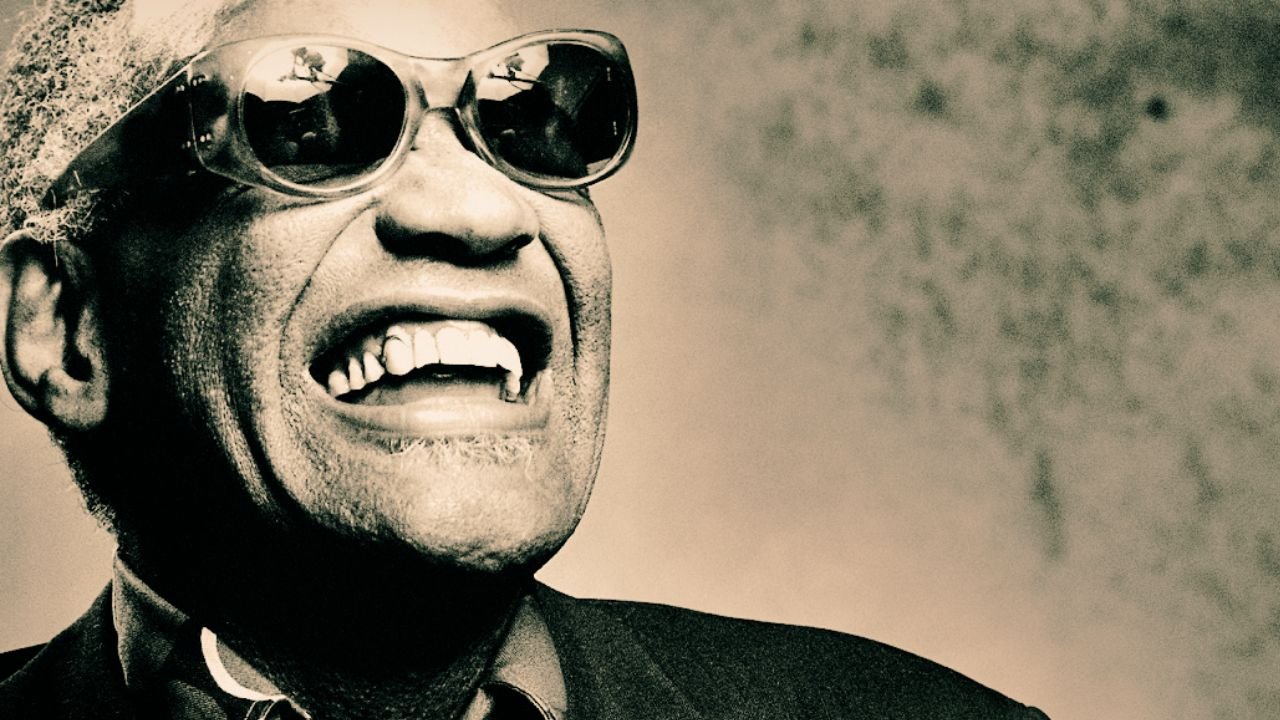

| Full name | Ray Charles Robinson |
|---|---|
| Known as | Ray Charles; “The Genius” |
| Born | September 23, 1930, Albany, Georgia, USA |
| Died | June 10, 2004, Beverly Hills, California, USA |
| Nationality | American |
| Profession | Singer, pianist, songwriter, composer |
| Known for | Pioneering soul music; “Georgia on My Mind,” “What’d I Say,” “Hit the Road Jack” |
| Parents | Bailey Robinson (father); Aretha Robinson (mother) |
| Spouse | Eileen Williams (1951–1952); Della Beatrice Howard Robinson (1955–1977) |
| Children | 12 biological children, including Ray Charles Robinson Jr., David Robinson, and Robert Robinson |
Ray Charles Robinson was not simply a great musician — he fundamentally reshaped American popular music by combining gospel, blues, jazz, R&B, and country in ways that had never been done at that scale. Doing this while blind, Black, and navigating a music industry built on racial segregation made his achievements all the more remarkable. The nickname “The Genius” was not a marketing invention. It stuck because the people around him, and eventually everyone else, could not find a better word.
From Albany to Greenville: A Childhood Defined by Loss
Ray Charles was born on September 23, 1930, in Albany, Georgia, to Bailey Robinson, a laborer, and Aretha Robinson, a laundress. The family moved to Greenville, Florida, where Ray grew up in genuine poverty. His younger brother George drowned in childhood — a loss that stayed with Ray throughout his life and is a recurring detail in nearly every serious account of his early years.
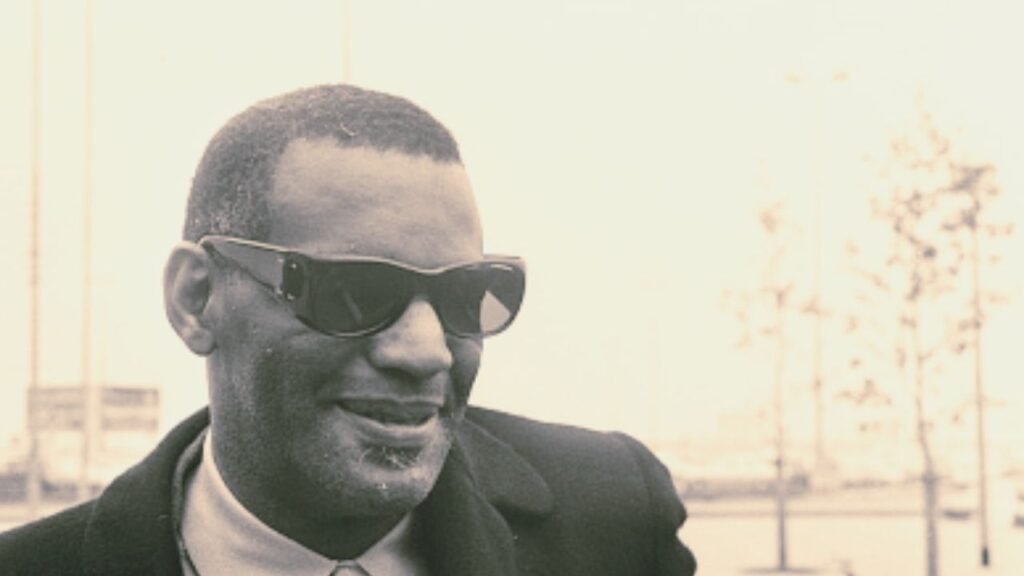
Around the same time, Ray began losing his sight. He was completely blind by approximately age seven, a condition commonly attributed to glaucoma, though the exact clinical details have never been definitively documented in public sources. Rather than being the end of his musical path, blindness redirected it. He attended the Florida School for the Deaf and Blind, where he learned classical piano, clarinet, music theory, and how to read and write music in Braille. Those skills — particularly the ability to arrange in Braille — became fundamental to how he worked as a professional musician decades later.
Building a Sound: Seattle, Atlantic Records, and Finding a Voice
In his late teens, Ray left Florida and eventually settled in Seattle, where he formed small trios and began performing in clubs. His early style leaned heavily on the smooth, polished sound of Nat King Cole and Charles Brown — he was talented and technically accomplished, but not yet distinctly himself.
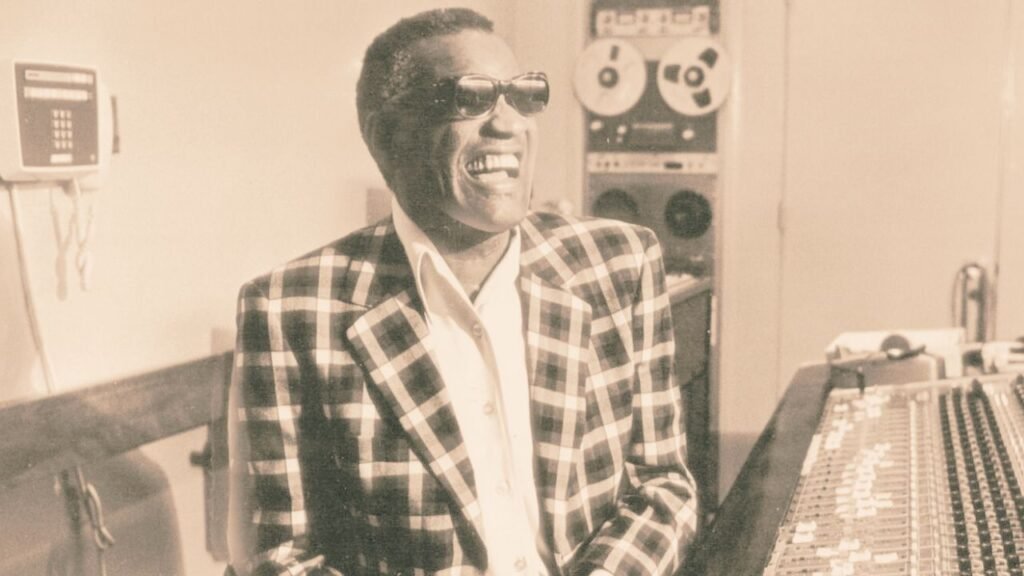
He had dropped “Robinson” from his professional name early on to avoid being confused with boxer Sugar Ray Robinson. As Ray Charles, he signed with Atlantic Records in the early 1950s and began developing something more personal: a gospel-inflected approach to R&B that drew on the emotional directness of the church without being confined to it. That shift from competent imitator to genuinely original artist defined the Atlantic years and set the stage for what came next.
The Records That Changed American Music
By 1959, Ray Charles had made the creative leap that would define his legacy. “What’d I Say” — with its churning piano line and gospel-style call-and-response between Charles and his backing singers — is widely cited as one of the foundational recordings of soul music. It was not just a hit; it was a structural innovation. He was bringing the emotional architecture of Black church music directly into secular R&B at a time when many considered that a transgression.
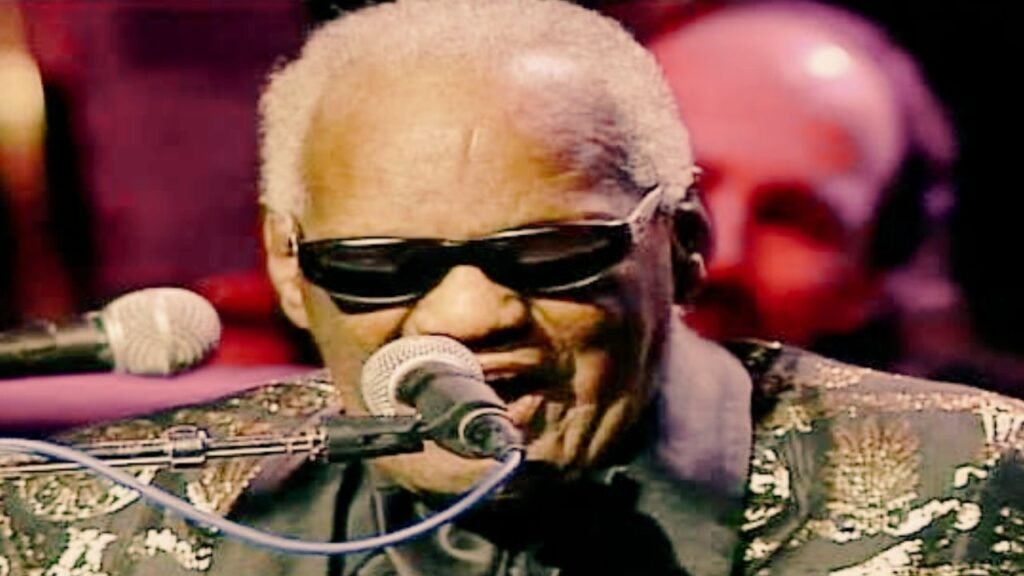
“Georgia on My Mind” followed in 1960 and demonstrated a different kind of reach. Lush, deeply felt, and impossible to place in a single genre, it became one of the most recognized recordings in American music history. The state of Georgia adopted it as its official state song in 1979. “Hit the Road Jack” and “I Can’t Stop Loving You” added further range — the first a sharp, punchy call-and-response, the second a country song transformed into a massive crossover hit.
That country connection was no accident. His early-1960s project Modern Sounds in Country and Western Music was a bold move that confounded the music industry’s assumptions about genre and race. By treating country material with the same seriousness he brought to blues and gospel, Charles reached audiences that had never been expected to buy his records and helped dismantle, at least commercially, the rigid genre walls that separated Black and white music markets.
Ray Charles’ Wife and Children
Ray Charles was married twice. His first marriage, to Eileen Williams in 1951, ended in divorce in 1952 and produced no children. His second marriage was the one that defined his domestic life.
He met Della Beatrice Howard Robinson — known to those close to her as Bea — in Texas in 1954. They married on April 5, 1955, and remained married for more than two decades. Together they had three sons: Ray Charles Robinson Jr., born May 25, 1955; David Robinson, born in 1958; and Robert Robinson, born in 1960.
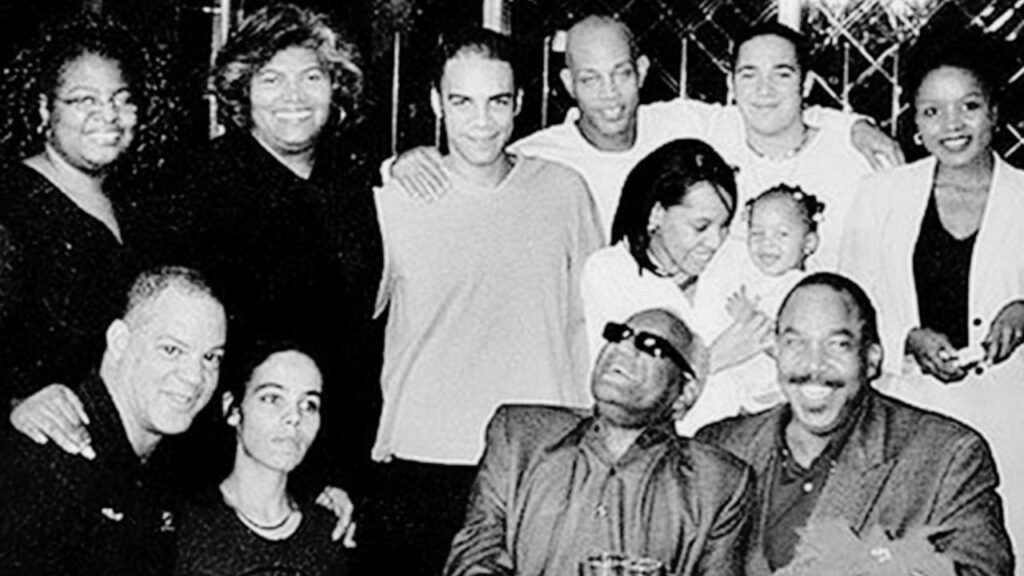
Della raised their sons largely while Ray toured relentlessly and struggled with addiction. Credible biographical accounts describe her as having primary custody of the boys after the marriage ended. Their divorce was finalized in 1977, after roughly 22 years together — a marriage that absorbed the full weight of Ray’s rising fame, his heroin addiction, and his infidelities.
Beyond the three sons with Della, Ray Charles fathered 12 biological children with 10 different women. Ray Charles Robinson Jr. has become the most publicly prominent of his children, working as a producer, author, and community activist. David and Robert Robinson are mentioned consistently in biographical accounts but have maintained lower public profiles.
Addiction, Arrests, and Recovery
Ray Charles’ long struggle with heroin addiction is well documented and cannot be separated from the story of his career or his marriage. His drug use dated back to his early professional years, and it led to arrests and serious legal jeopardy in the 1960s. He eventually underwent treatment and is widely reported to have overcome his addiction — an achievement that, given the era and the circumstances, was far from inevitable.
The addiction strained his relationship with Della and shaped the environment in which his sons grew up. It also coexisted with some of the most creatively fertile years of his life, which speaks to the complicated reality of how genius and self-destruction can run in parallel without fully canceling each other out.
Recognition and Later Years
Ray Charles continued recording and performing well into the late 1990s and early 2000s. He remained a significant live draw and a figure of genuine reverence in the music world — not the kind of reverence that gets politely applauded and forgotten, but the kind where working musicians and critics alike consistently ranked him among the most important artists of the 20th century.
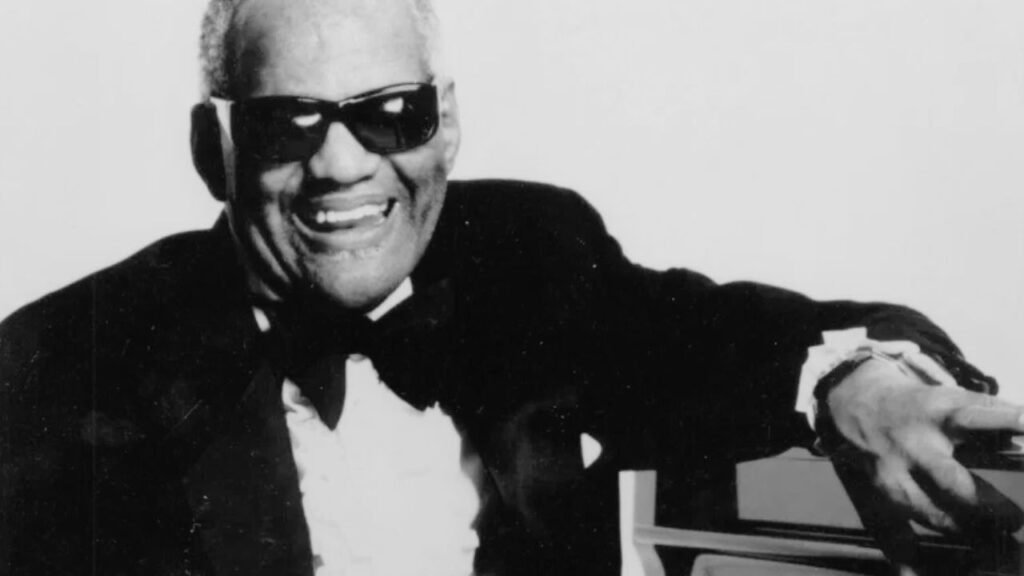
His Grammy Awards included recognition for “Georgia on My Mind” and “Hit the Road Jack,” among others. He was inducted into the Rock and Roll Hall of Fame, and his recordings continued to reach new listeners long after the original chart runs. For anyone researching the intersection of music, business, and personal achievement, resources like First Business Mag offer useful frameworks for understanding how extraordinary individuals build lasting legacies under difficult conditions.
Ray Charles died on June 10, 2004, in Beverly Hills, California, from complications of liver disease. He was 73. His death prompted an outpouring of tributes from across the music world, but perhaps the most accurate summary came from his own back catalog — a body of work so varied, so widely influential, and so consistently excellent that it does not require much embellishment. “The Genius” was, by almost any measure, the right word.