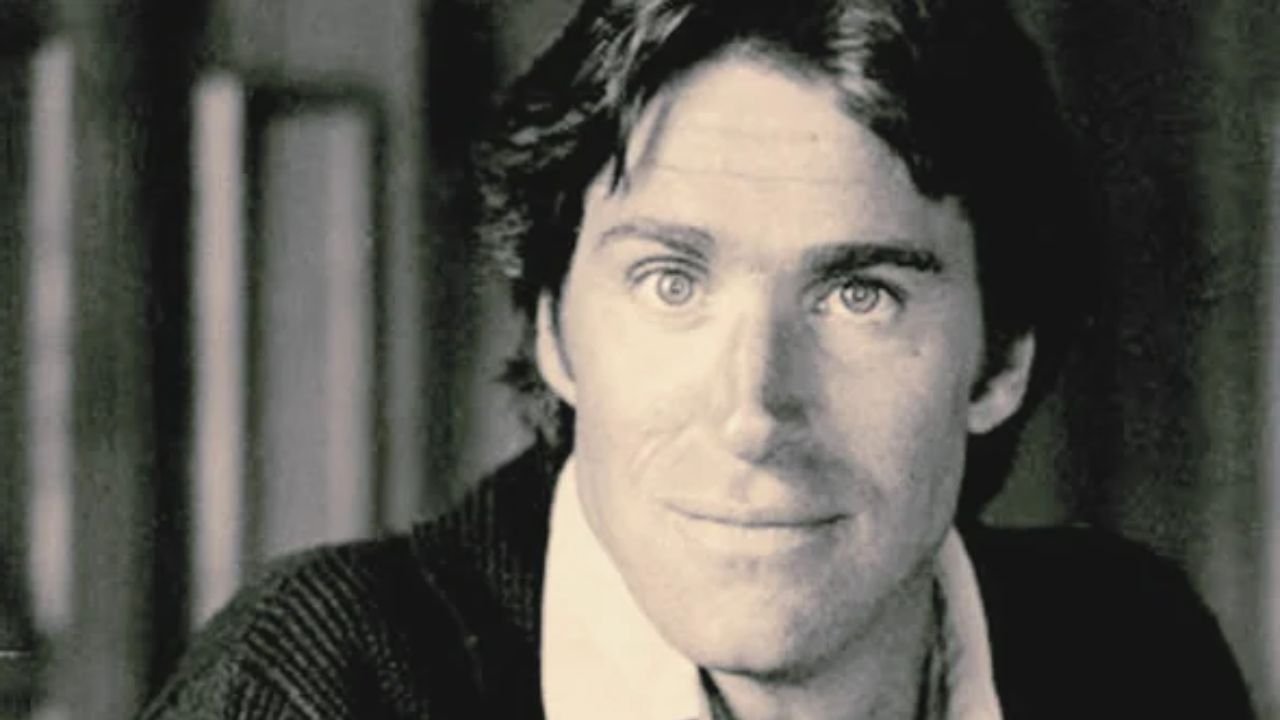

| Full name | Daniel Grayling Fogelberg |
|---|---|
| Born | August 13, 1951, Peoria, Illinois |
| Died | December 16, 2007, Maine (age 56) |
| Nationality | American |
| Profession | Singer-songwriter, multi-instrumentalist, producer |
| Known for | “Longer,” “Same Old Lang Syne,” “Leader of the Band,” “Run for the Roses” |
| Parents | Lawrence Fogelberg (father), Margaret Irvine (mother) |
| Spouses | Maggie Slaymaker (m. 1982–1985); Jean Fogelberg |
Dan Fogelberg spent much of the 1970s and 1980s building one of the more quietly substantial careers in American popular music. He was not a rock spectacle or a country crossover star. He was a craftsman — a singer, songwriter, and multi-instrumentalist whose best work combined melodic clarity with genuine emotional weight. His name became shorthand for a particular kind of thoughtful, polished soft rock, though that label never fully captured what he was doing.
From Peoria to the Stage: Dan Fogelberg’s Formative Years
Daniel Grayling Fogelberg was born on August 13, 1951, in Peoria, Illinois. He grew up in a household where music was not a hobby but a serious occupation. His father, Lawrence Fogelberg, was a musician, educator, and bandleader whose professional life set an early standard for what dedication to music actually looked like.
That environment shaped Dan in concrete ways. He developed an unusually broad instrumental range from an early age and absorbed an understanding of musicianship that went well beyond learning a few chords. By the time he began recording professionally in the early 1970s, he already had the instincts of someone who had grown up inside music rather than simply listening to it from the outside.
Building a Career: Home Free to the Joe Walsh Collaboration
Fogelberg released his debut album, Home Free, in 1972. It was an honest first statement but did not reach wide audiences. The real turning point came two years later with Souvenirs (1974), produced with rock guitarist Joe Walsh. The album’s single “Part of the Plan” became Fogelberg’s first major breakthrough and introduced him to a national audience that would follow him for the next two decades.
The Walsh connection was telling. Fogelberg was not interested in staying within safe or obvious boundaries, and working with a rock producer on a largely folk-inflected singer-songwriter record showed an early willingness to bring unlikely collaborators into his work. Captured Angel followed in 1975, and Nether Lands in 1977, each album deepening his reputation as a serious artist rather than a commercial formula act.
The Breadth of His Sound: Jazz, Bluegrass, and the Tim Weisberg Partnership
In 1978, Fogelberg recorded Twin Sons of Different Mothers with jazz flutist Tim Weisberg. It was an unusual project — two instrumentalists meeting somewhere between jazz and folk, far removed from the radio-friendly singer-songwriter material Fogelberg was known for. The album went platinum, proving that his audience was willing to follow him into less familiar territory.
That restlessness showed up again in 1985 with High Country Snows, a bluegrass record that found him working in an entirely different American tradition. Fogelberg was a genuine multi-instrumentalist, and these shifts in style were not calculated pivots. They reflected the range of music he had absorbed growing up and continued to absorb throughout his career. Soft rock was one part of his output, not the whole picture.
The Innocent Age and the Peak of His Career
By 1981, Fogelberg was at the height of his commercial and creative powers. The Innocent Age, released that year, was an ambitious double album that contained four songs that would define his legacy: “Same Old Lang Syne,” “Hard to Say,” “Leader of the Band,” and “Run for the Roses.” It remains the work most closely associated with his name.
“Same Old Lang Syne” — a melancholy story of a chance reunion with a former lover in a grocery store on Christmas Eve — showed his gift for specific, cinematic detail. It is a small story told with enough precision that it feels universal. The song has never entirely left popular culture, cycling back each holiday season with the quiet persistence of a song that genuinely earned its place.
“Leader of the Band” carried different weight. Written as a tribute to his father Lawrence Fogelberg, the song was openly personal in a way that commercial music rarely managed. It honored a musician and educator whose influence shaped the son’s entire career, and it did so without sentimentality getting in the way of the feeling. That combination — honesty and restraint — was one of Fogelberg’s signature qualities.
The album’s success built on the momentum of Phoenix (1979), which had already given him “Longer,” one of his most recognizable songs. By the early 1980s, Fogelberg had moved from promising singer-songwriter to one of the more prominent figures in American adult contemporary music.
Later Work and Life in Colorado and Maine
Windows and Walls appeared in 1984, followed by the bluegrass departure of High Country Snows in 1985. His 1990 album The Wild Places marked another shift: it was his first self-produced record, largely recorded at his Mountain Bird Ranch. The choice to produce his own work reflected both his increasing independence as an artist and his longstanding commitment to understanding every aspect of the recording process.
He continued recording into the 2000s. River of Souls came out in 1993, followed by the Christmas album The First Christmas Morning in 1999, and Full Circle in 2003, the final studio album he completed in his lifetime. Two posthumous releases followed — Love in Time in 2009 and Live at Carnegie Hall in 2017 — suggesting a catalog that his estate and fans found worth preserving and sharing.
For readers interested in the business and cultural dimensions of careers like Fogelberg’s, First Business Mag covers the entertainment and music industries alongside broader business topics.
The Fogelberg Family
Fogelberg’s family life was central to his work in ways that most artists never made explicit. His father, Lawrence Fogelberg, was a musician, teacher, and bandleader whose career created the musical atmosphere Dan grew up in. That influence was direct enough to become the subject of one of his most celebrated songs.
His mother, Margaret Irvine, came from a background in operatic singing, adding another layer of musical seriousness to the household where he was raised.
Fogelberg married Maggie Slaymaker, a dancer, in 1982. That marriage ended in 1985. He later married Jean Fogelberg, a professional musician, who remained his partner for the rest of his life. When he died at home in Maine in December 2007, Jean was beside him.
Diagnosis, Death, and Legacy
In 2004, Fogelberg was diagnosed with advanced prostate cancer. He was 52 years old. He spoke publicly about the diagnosis and became associated with efforts to raise awareness of the disease among men, particularly younger men who might not consider themselves at risk.
He died on December 16, 2007, at his home in Maine. He was 56. The music world lost a figure who had produced a catalog of genuine durability — songs that held up not because of production novelty or cultural moment but because of the songwriting underneath them.
In 2017, the Colorado Music Hall of Fame inducted him posthumously, connecting the event with prostate-cancer fundraising. It was a fitting acknowledgment: an institution recognizing an artist who had spent time in Colorado, built some of his most personal work there, and whose late years had drawn attention to a disease that continues to affect millions of men.
Fogelberg never fit cleanly into any single category. He was too eclectic for pure soft rock, too commercial for the folk purists, and too personal for easy adult contemporary radio. What he left behind is a body of work that rewards listening — specific, carefully made, and grounded in a musical seriousness that started in a house in Peoria, Illinois, with a bandleader father and a son who was paying attention.