
If you’ve searched for Rainhandler recently and hit dead ends — a closed website, no social media presence, no one picking up the phone — you’re not imagining things. Multiple sources now confirm that Rainhandler has ceased operations, and the pattern of evidence is consistent enough to treat the closure as a settled matter rather than a rumor.
This article covers what Rainhandler was, what the evidence shows about its closure, why it struggled to compete, and what you should do if you already have the system installed or were planning to buy it.
What Rainhandler Was and How It Worked
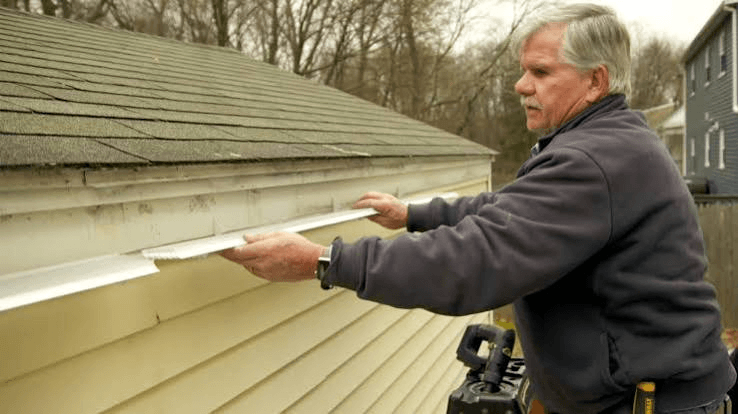
Rainhandler was a gutter-alternative system installed along the roof edge. Instead of channeling rainwater through traditional gutters and downspouts, it broke the water into small droplets and dispersed them across a 2–3 foot area around the base of the house.
The company marketed it as a low-maintenance, eco-friendly option. The idea was that dispersing water across the property rather than routing it into storm sewers was better for the environment. For homeowners tired of cleaning clogged gutters, it had obvious appeal.
It occupied a niche in the broader gutter and roofing market — not mainstream, but not fringe either. It had a real customer base, mostly homeowners who wanted to avoid the hassle of traditional gutters but weren’t sold on conventional alternatives.
The Evidence That Rainhandler Has Closed
The most direct answer: yes, Rainhandler appears to have gone out of business. Multiple business publications explicitly state that the company has ceased operations. The official website is closed or inactive, and there is no current social media presence.
At least one BBB profile for a Rainhandler-branded business — the listing for Rainhandler Seamless Aluminum Guttering in Tupelo, Mississippi — is marked as “believed to be out of business” based on BBB files.
It’s worth being precise here: no formal public closure announcement has been documented. The conclusion is drawn from website inactivity, directory status, and the absence of any business activity — not from an official press release or court filing. But the evidence across multiple independent sources points in the same direction, and it’s consistent enough to be reliable.
Local “Rainhandler” Businesses Are Not the Same as the Manufacturer
Here’s where things can get confusing. If you search online, you may find Rainhandler-branded businesses still listed in local directories. That doesn’t mean the original product manufacturer is still operating.
BBB listings show Rainhandler-named businesses in Mississippi, Florida, and Texas. Some of these are local gutter contractors — separate entities that either used the Rainhandler name or installed the product at some point. They are not the same as the company that manufactured and distributed the Rainhandler system.
Some of those local businesses may still be operating independently. Others may also be inactive. The point is that finding a “Rainhandler” listing in a local directory tells you very little about whether the original brand is still making or shipping product.
To check the status of any specific listing, look up the BBB profile directly, watch for any “believed to be out of business” notes, and try to make direct contact before assuming anything. State contractor licensing databases — like Florida’s Department of Business and Professional Regulation — can also help you verify whether a local contractor is still active.
It’s also worth knowing that some product directories, like ARCAT, still list a Rainhandler address in Bridgeport, Connecticut. This is a good example of how directories lag behind actual business reality. An active listing doesn’t mean an active business.
Why Rainhandler Struggled to Compete
Reported causes for the closure include financial difficulties and increased competition from conventional gutter systems. No specific figures or bankruptcy filings have been made public, so it’s fair to treat these as reported and inferred reasons rather than confirmed facts.
The competitive landscape is worth understanding. Seamless aluminum gutters are widely installed, contractor-familiar, and trusted by homeowners. Leaf guards and gutter protection systems have improved significantly over the years. These products have broad market support — easy to source, easy to install, easy to repair.
Rainhandler faced the opposite position. It was unconventional enough that most contractors weren’t familiar with it. Performance reviews were mixed. Experts noted that while Rainhandler could work in certain situations, traditional gutter systems are generally considered safer and more protective for most homes — particularly when it comes to directing water away from the foundation.
A product that works adequately in some conditions but not all is a difficult sell when it’s competing against an entrenched standard that most homeowners already trust. That’s a structural challenge that’s hard to overcome at scale, regardless of the product’s environmental benefits.
What to Do If You Already Have Rainhandler Installed
If Rainhandler is currently on your home, you don’t need to panic — but you do need a realistic plan.
If the system is functioning without problems
An existing Rainhandler system can continue to work for now. The closure of the manufacturer doesn’t automatically make your installation fail. However, if parts wear out or something needs replacement, sourcing them will be difficult. Official support is gone, and any remaining inventory would only exist through independent resellers — if at all.
If you’re seeing foundation or erosion issues
This is where you need to act. Rainhandler disperses water across a wide area near the foundation rather than routing it away through downspouts. In some soil conditions or landscaping setups, that can cause erosion or moisture problems near the foundation over time.
A practical example: a homeowner with a 15-year-old Rainhandler system notices soil erosion near the house and asks a local contractor for advice. The contractor’s likely recommendation — given the manufacturer is closed — would be to either adjust the landscaping around the drip line to handle the dispersed water, or remove the Rainhandler system and install seamless gutters with downspouts directed away from the foundation.
If you’re buying a home with Rainhandler already installed
Factor the cost of potential gutter replacement into your offer. A home inspector familiar with gutter systems can tell you whether the existing setup is causing any drainage problems. Since the original manufacturer is gone, retrofitting to conventional gutters is the most straightforward long-term option.
Alternatives Worth Considering Now
For homeowners who need to replace Rainhandler or are simply evaluating their options, the mainstream market offers practical choices.
- Seamless aluminum gutters are the most common replacement. They’re contractor-familiar, durable, and available in most areas. With proper installation and downspout placement, they handle water management well for most homes.
- Gutter guards and leaf screens address the maintenance concern that drew many people to Rainhandler in the first place. They reduce debris buildup and cleaning frequency without replacing the entire water management approach.
- French drains or landscaping adjustments can supplement any system if foundation drainage is already a concern.
None of these are as unconventional as Rainhandler was — but that predictability is part of the value. You can find contractors, parts, and support without difficulty.
A Practical Lesson for Contractors and Builders
If you’re a contractor or a small business in the building trades, Rainhandler’s story is a useful case study. A company that relied on a single unconventional product without broad market validation is always vulnerable. When the product faces mixed reviews and the market tilts toward familiar solutions, the company has no fallback.
For anyone sourcing specialty building products, this reinforces a basic point: check manufacturer status before recommending a product to clients. A roofing company that was considering adding Rainhandler to its offering would discover quickly — by checking BBB listings and attempting contact — that the manufacturer has ceased operations and parts may not be available. The practical move is to focus on products with ongoing manufacturer support and clear market demand.
For more business coverage and practical industry analysis, visit First Business Mag.
Final Takeaway
Rainhandler has, by all available evidence, gone out of business. The website is inactive, social media is gone, and at least one BBB listing marks it as believed to be out of business. No formal announcement exists, but the pattern is clear and consistent across multiple sources.
If you have Rainhandler installed, your system can keep working — but plan for the fact that manufacturer support and replacement parts are effectively unavailable. When problems arise, switching to conventional seamless gutters is the most reliable long-term solution.
And if you find a “Rainhandler” listing in your local directory, verify it directly before assuming anything. Local contractors may share the name, but they are not the same as the original manufacturer. Check the BBB profile, try direct contact, and use state licensing databases to confirm current status.
Also Read This: