

| Full name | James Hugh Calum Laurie |
|---|---|
| Born | June 11, 1959, Oxford, England |
| Nationality | British |
| Profession | Actor, comedian, writer, musician |
| Known for | Dr. Gregory House in House; Blackadder; A Bit of Fry & Laurie; Jeeves and Wooster; The Night Manager |
| Father | William George Ranald “Ran” Laurie |
| Mother | Patricia Laidlaw Laurie |
| Golden Globe Awards | Three wins: House (2006, 2007); The Night Manager (2017) |
Hugh Laurie is one of those rare entertainers whose career has consistently defied expectations. He arrived in the public eye as a physical comedian in British sketch shows, spent nearly a decade playing one of American television’s most compelling dramatic leads, and has maintained a serious parallel life as a blues musician. Audiences who discovered him through the medical drama House were often surprised to learn he was English — let alone that he had built a substantial career in Britain long before an American network came calling.
His full name is James Hugh Calum Laurie. He was born on June 11, 1959, in Oxford, England, and has remained a distinctly British figure even as his work has become international in scope.
Born in Oxford, Shaped at Eton and Cambridge
Laurie attended Eton College, where rowing was a serious pursuit rather than an extracurricular afterthought. The sport runs deep in his family — his father was an Olympic gold medalist — and Laurie took it seriously enough to compete at a high level during his school years.

He went on to Selwyn College, Cambridge, and it was there that the trajectory shifted. His involvement with the Cambridge Footlights Dramatic Club drew him away from competitive rowing and toward comedy and performance. The Footlights had produced generations of British entertainers, and it would prove just as formative for Laurie as it had for those who came before him. It was also where he met Stephen Fry, a partnership that would define the first chapter of his professional life.
An Olympic Father and an Athletic Inheritance
Any account of Hugh Laurie needs to give proper weight to his father, William George Ranald “Ran” Laurie. Ran Laurie was a physician and an elite competitive rower who won a gold medal in the coxless pairs at the 1948 London Olympics. That combination — doctor and Olympian — gives an interesting backdrop to Hugh’s later years playing a physician on screen, though the connection is coincidental rather than biographical.
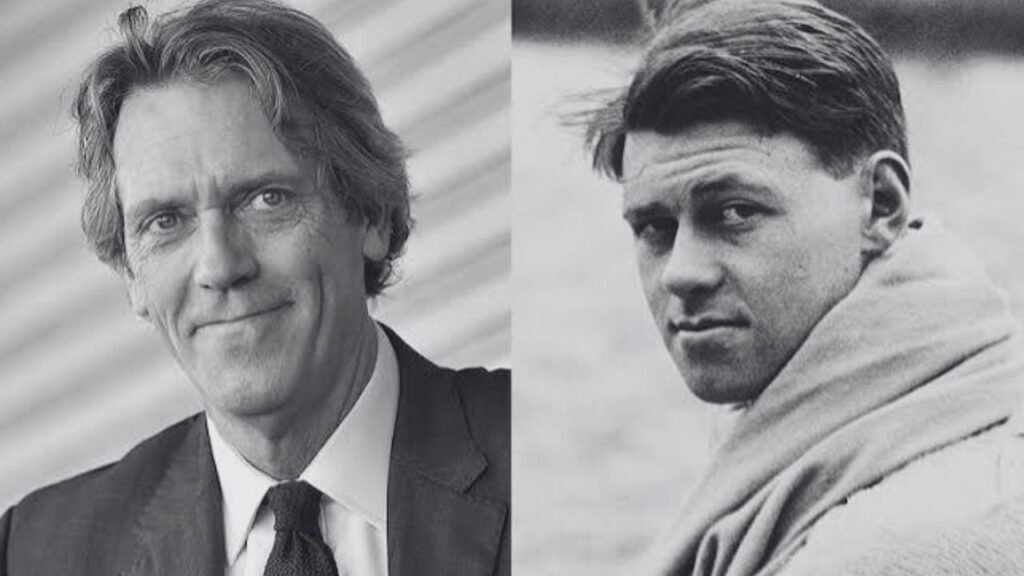
Hugh rowed competitively himself at school and university, but he did not compete at Olympic level. The athletic heritage is real and worth acknowledging, but the gold medal belongs to his father. The two are sometimes confused on this point, and the distinction matters.
British Comedy and the Fry Partnership
Through the 1980s and into the 1990s, Laurie built a substantial reputation in British television. His partnership with Stephen Fry, which began at Cambridge, produced some of the most celebrated British comedy of that era. The two appeared together in Blackadder, the period sitcom that ran through several acclaimed series, and co-created and starred in A Bit of Fry & Laurie, a sketch show that ran from 1989 to 1995.
The work that most clearly demonstrated Laurie’s range during this period was Jeeves and Wooster, which aired from 1990 to 1993. Adapted from P.G. Wodehouse’s stories, it cast Laurie as Bertie Wooster — the amiably clueless aristocrat — opposite Fry’s supremely capable valet Jeeves. The role required physical comedy, impeccable timing and the ability to carry a sustained character across multiple series without the joke wearing thin. Laurie managed all three.
These productions established him as a genuine comedic talent in Britain. They also showed that he could anchor a television drama rather than simply support one — a quality that would matter enormously a decade later.
Dr. Gregory House and the American Reinvention
When Fox’s medical drama House launched in 2004, most American audiences had no idea who Hugh Laurie was. They encountered him as Dr. Gregory House — a diagnostician of extraordinary ability and difficult personality, addicted to painkillers, contemptuous of his patients’ feelings and genuinely brilliant at what he did. It was a long way from Bertie Wooster.
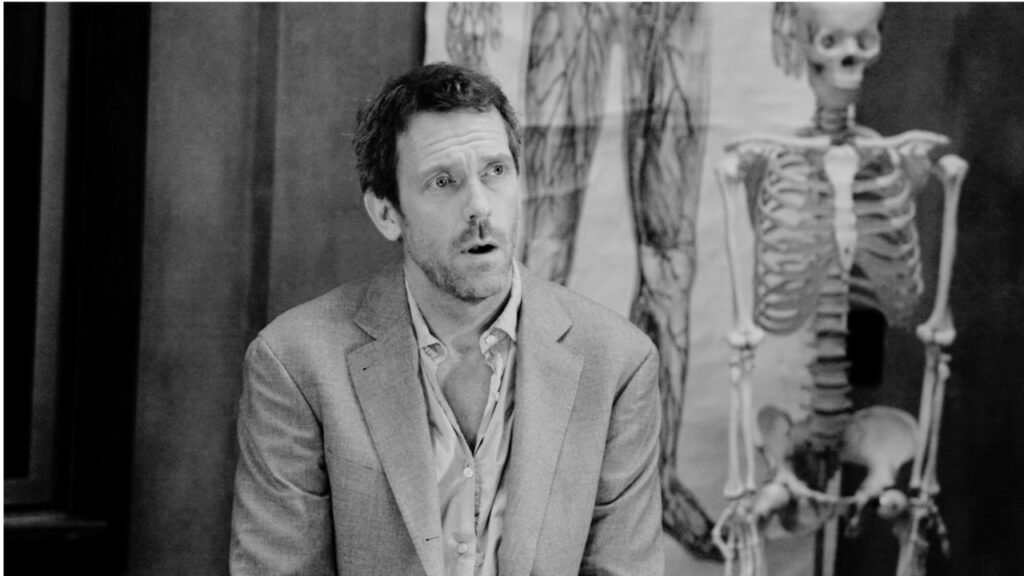
What made the performance particularly striking was the accent. Laurie played House with a convincing American inflection that led many viewers to assume his natural British voice was an affectation. He was, in fact, recording audition tapes in a Californian hotel room and sending them to producers who had no idea they were watching an Englishman. The producers cast him without meeting him in person, and the revelation of his actual nationality became a small point of cultural surprise when the show became a hit.
House ran until 2012. During its run, Laurie won the Golden Globe for Best Actor in a Television Series — Drama in both 2006 and 2007. The character became genuinely iconic in American television drama — caustic, morally complicated, and more interested in puzzles than people. It was a performance that required Laurie to suppress almost everything that had made him famous in Britain and build something entirely different in its place.
Prestige Drama After House — The Night Manager and Beyond
When House ended, there was a real question about what Laurie would do next. The answer came in 2016 with The Night Manager, the BBC and AMC limited series adapted from John le Carré’s novel. Laurie played Richard Onslow Roper, the charming and ruthless arms dealer at the centre of the story. It was a villain’s role — polished, dangerous, operating in moral shadows — and Laurie played it with considerable authority.
The performance earned him his third Golden Globe, this time for Best Supporting Actor in a Series, Limited Series or Motion Picture Made for Television, awarded in 2017. Three Golden Globes across two different shows, spanning comedy drama and prestige thriller, is a record that few British television actors can match.
Music and Writing as Parallel Pursuits
Acting has never been Laurie’s only creative outlet. He has maintained a serious interest in blues music throughout his career, releasing two studio albums: Let Them Talk and Didn’t It Rain. These are genuine blues records made with working musicians, not celebrity vanity projects — a distinction that critics generally acknowledged when they were released.

He has also written fiction. His novel The Gun Seller is a comic crime thriller that earned its own audience separately from his television fame. The book reflects the same instinct for wit and timing that defined his comedy work, applied to a different form.
Taken together, these pursuits paint a picture of someone who treats creative work seriously across multiple disciplines. For readers interested in following his career more broadly, First Business Mag covers profiles of notable figures across entertainment and business.
The Laurie Family Background
Hugh is the youngest of four children. His father, Ran Laurie, combined a career in medicine with his achievements as an Olympic athlete — a dual identity that was clearly unusual and clearly influential. His mother was Patricia Laidlaw Laurie.

His older siblings are Charles Alexander Lyon Mundell Laurie, Susan Laurie and Janet Laurie. Growing up the youngest in a family shaped by a father of that calibre — physician, Olympian, gold medalist — seems like fertile ground for either a competitive drive or a search for a different kind of distinction entirely. Laurie found his through performance.
A Career That Resists Easy Summary
What makes Hugh Laurie’s career genuinely interesting is not any single role or achievement but the consistent willingness to move between registers. He arrived as a physical comedian, became a beloved character actor in British period television, reinvented himself entirely for American drama, and then stepped into serious villain territory in prestige British television. The music and the novel sit alongside all of this, not as distractions but as evidence of someone who takes creative work on its own terms.
He is often discussed primarily through House, which is understandable given the show’s global reach and the scale of his performance in it. But reducing him to that role alone misses the full picture — a career built over four decades in comedy, drama, music and fiction, rooted in a family background that was exceptional long before he appeared on screen.