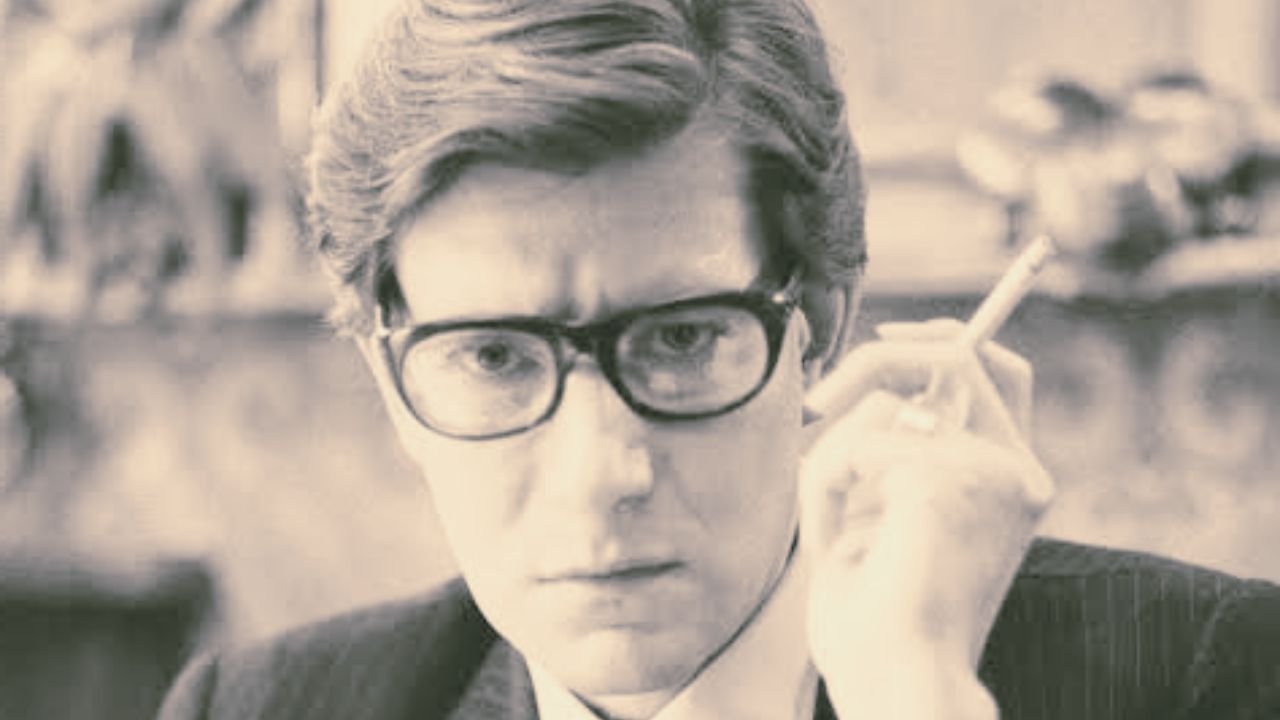

| Full name | Yves Henri Donat Mathieu-Saint-Laurent |
|---|---|
| Known as | Yves Saint Laurent |
| Born | 1 August 1936, Oran, French Algeria |
| Died | 1 June 2008 |
| Nationality | French |
| Profession | Fashion designer |
| Known for | Co-founding the Yves Saint Laurent couture house; work at Christian Dior |
| Parents | Charles Mathieu-Saint-Laurent; Lucienne Andrée Mathieu-Saint-Laurent |
Yves Saint Laurent is one of those rare figures whose name became inseparable from the industry he shaped. Born in colonial Algeria, trained in Paris at the most prestigious couture house in the world, and later the co-founder of his own label, he spent his career changing what people expected from fashion. His story begins, however, not in Paris but in Oran — in a comfortable family home, with a mother whose clothes caught his eye and two younger sisters who became his first audience.
A Childhood in Oran
Yves Henri Donat Mathieu-Saint-Laurent was born on 1 August 1936 at the Jarsaillon Clinic in Oran, then part of French Algeria. He grew up in an affluent French settler family with deep roots in the region. The Mathieu-Saint-Laurents had been in Algeria since the nineteenth century, having arrived from Alsace in 1870, and they were firmly established within Oran’s social class.
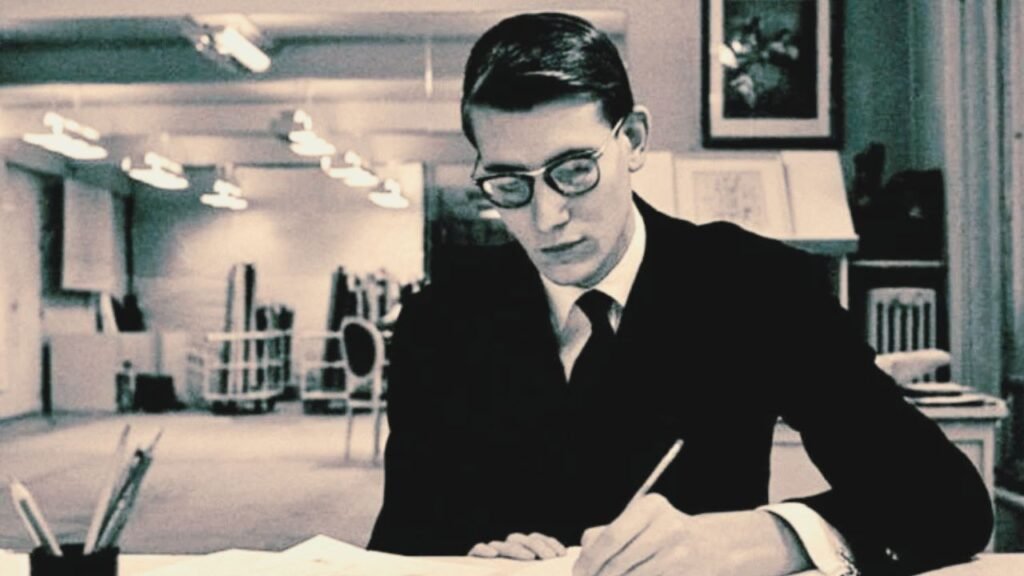
His father, Charles Mathieu-Saint-Laurent, managed an insurance company and owned a chain of cinemas. His mother, Lucienne Andrée Mathieu-Saint-Laurent, had a strong personal sense of style that left a lasting impression on her son. From an early age, Yves paid close attention to how the women around him dressed — an interest that would define his entire professional life.
It is a common misconception that Saint Laurent was born in France. He was not. Oran was a French colonial city, and the family was French in culture and nationality, but his origins were firmly North African, and that geographical and cultural distance from Paris would shape the journey he eventually made toward it.
Sisters, Paper Dolls, and the First Creative World
Yves was the oldest of three children. His younger sisters, Michèle and Brigitte, were born in 1942 and 1945 respectively, and they became his earliest creative collaborators — if not quite willing ones. As a child, he dressed paper dolls and invented characters and stories for his sisters to enjoy. It was a pastime that now reads as an early rehearsal for the work he would later do professionally.
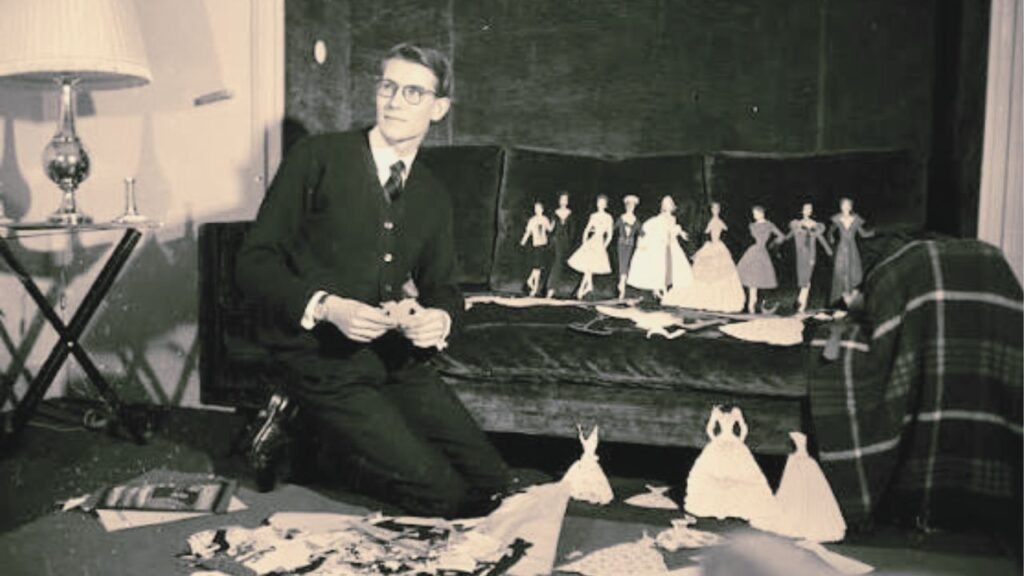
The Musée Yves Saint Laurent Paris has documented these childhood activities as genuinely formative rather than merely charming anecdote. The imaginative world he built around clothing, character and storytelling drew directly on his domestic environment: his mother’s wardrobe, his sisters as an audience, and the everyday theatre of how women around him presented themselves.
This combination — an instinct for clothes, a flair for invention, and a constant female reference — would run through his design work for decades.
First Steps Toward Paris
In 1953, at the age of seventeen, Saint Laurent made his first trip to Paris. He had entered the International Wool Secretariat competition — known in French as the Secrétariat International de la Laine — and won third prize in the dress category. It was a significant early recognition for a teenager still living in Oran.
During that Paris visit, he met Michel de Brunhoff, who was then the editor of Vogue Paris. Brunhoff recognised what the young Saint Laurent could do and encouraged him to keep designing while finishing his secondary education back in Algeria. It was one of those introductions that quietly changes the course of a career before the career has properly begun.
The meeting gave Saint Laurent a connection to the professional fashion world and, perhaps more importantly, the confidence that his work was worth pursuing. He returned to Oran, completed his schooling, and then made his way back to Paris to start in earnest.
From the Dior Atelier to His Own House
Saint Laurent joined Christian Dior in 1955, aged eighteen. Dior’s house was at that point the most influential force in postwar Parisian haute couture, and working there placed the young designer at the very centre of the industry. His development within the atelier was rapid.
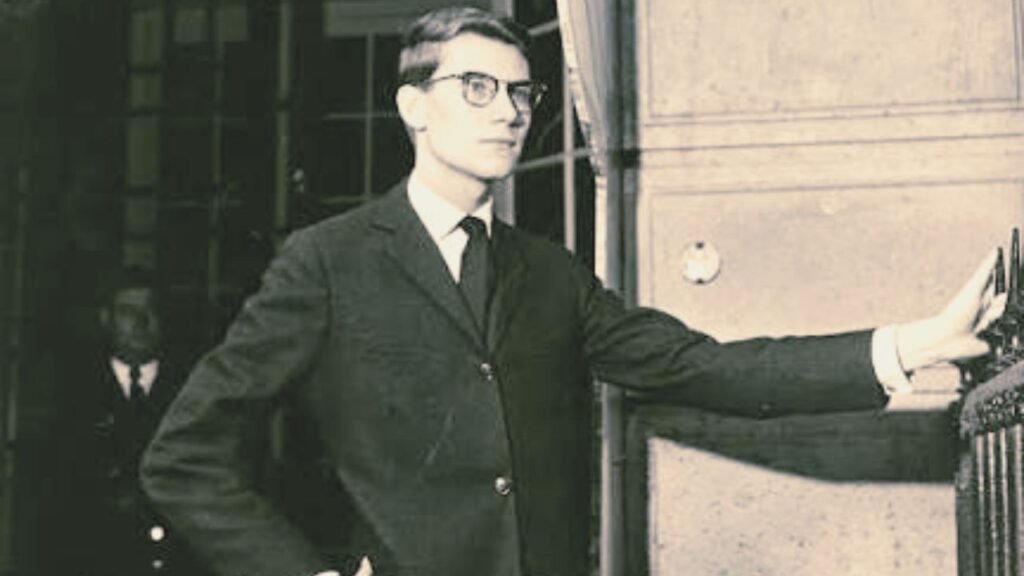
When Christian Dior died in 1957, Saint Laurent was named head of the house — an extraordinary responsibility for someone in his early twenties. He presented his first collection for Dior to wide acclaim, though his subsequent work there met more resistance, and he eventually left the house after being called up for military service in 1960. The separation from Dior, however difficult its circumstances, cleared the way for what came next.
In 1961, Saint Laurent and Pierre Bergé co-founded the Yves Saint Laurent couture house. Saint Laurent was twenty-four. The new house gave him full creative control over his own name and his own vision, something that the structures of an established couture house could never quite provide.
The Saint Laurent–Bergé Partnership
Pierre Bergé was central to the Yves Saint Laurent story in two distinct but connected ways. He was Saint Laurent’s longtime personal partner, and he was the business co-founder who turned the designer’s creative output into a functioning, lasting enterprise.
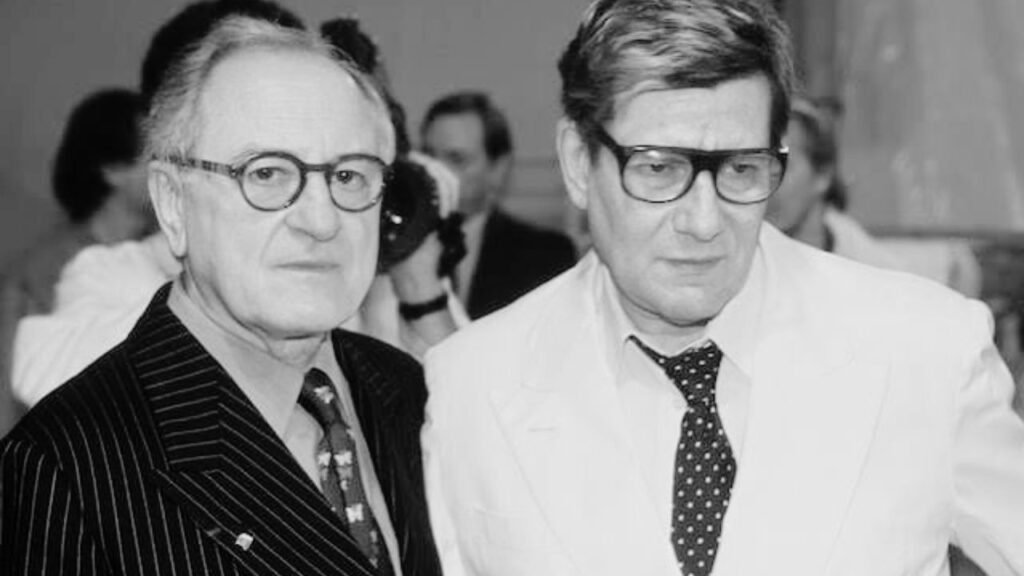
The combination worked because the two men’s skills did not overlap. Saint Laurent brought the ideas, the instinct and the eye. Bergé brought organisational discipline and commercial focus. The couture house they built together grew from a single Paris atelier into an internationally recognised label spanning clothing, accessories and perfumes.
The Musée Yves Saint Laurent Paris, which opened in the former couture house premises in the Rue Spontini in the 16th arrondissement, covers both the personal and professional dimensions of the Saint Laurent–Bergé relationship through its interactive biographies. Their partnership, in both its forms, sustained the label across decades and shaped the institution that now preserves Saint Laurent’s legacy.
A Legacy in Cloth and Culture
Saint Laurent’s career ran across some of the most culturally turbulent decades of the twentieth century, and his work consistently engaged with the world beyond fashion. He connected haute couture to art, cinema, and the social changes of the 1960s and 1970s in ways that reshaped what expensive clothes were supposed to mean.
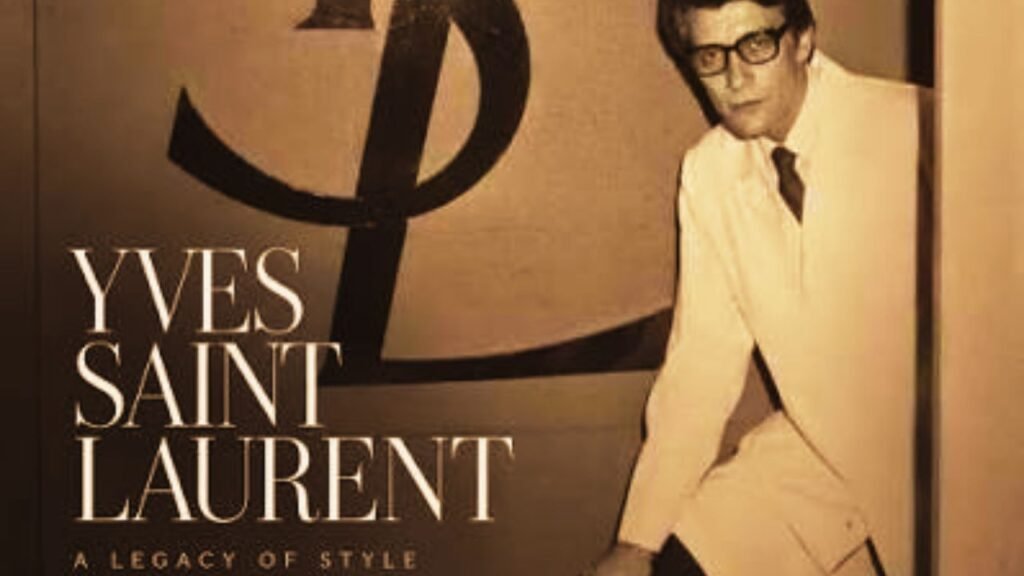
His contribution was not limited to a single garment or collection. He helped establish designer ready-to-wear as a serious creative pursuit, not merely a commercial offshoot of couture. He treated the women who wore his clothes as the subject of his work, not simply the occasion for it — an approach that owed something, perhaps, to those childhood evenings in Oran, dressing paper dolls and watching his mother get ready.
Saint Laurent died on 1 June 2008. He was seventy-one.
For readers interested in the broader world of business and culture that figures like Saint Laurent helped shape, First Business Mag covers the stories behind influential industries and the people who built them.
The museum that bears his name continues to operate in the building where his most sustained creative work was done. It holds his designs, his personal archive, and the records of a life that moved — improbably, and then inevitably — from a childhood in colonial Algeria to the front row of everything Paris had to offer.