

| Full name | Patrick Leonard Sajdak |
|---|---|
| Known as | Pat Sajak |
| Born | October 26, 1946, Chicago, Illinois |
| Age | 78 |
| Nationality | American |
| Profession | Television host, broadcaster |
| Known for | Hosting Wheel of Fortune (1981–2024) |
| Parents | Leonard Sajdak and Joyce Brandecki Sajdak |
| Spouse | Lesly Brown (married 1989) |
| Children | Patrick Michael James Sajak, Maggie Sajak |
| Current role | Franchise consultant, Wheel of Fortune |
Pat Sajak spent more than four decades as the face of Wheel of Fortune, making him one of the most consistently recognized personalities in American television. His final regular episode aired on June 7, 2024, closing out a run that had begun when Jimmy Carter was still in the White House. But the path that led him to that hosting chair ran through military service in Vietnam, a string of radio jobs in the South, and years of weathercasting in Nashville and Los Angeles — chapters that rarely come up when people talk about the man who spun the big wheel.
From Chicago’s West Side to the U.S. Army
Patrick Leonard Sajdak was born on October 26, 1946, in Chicago, Illinois, and grew up on the city’s West Side. His parents, Leonard Sajdak and Joyce Brandecki Sajdak, raised him in a Polish American household before eventually divorcing. It was a working-class Chicago upbringing — far removed from the soundstage that would later define his public identity.

In 1968, Sajak joined the U.S. Army and was sent to Vietnam, where he served with Armed Forces Radio in Saigon. The assignment turned out to be more than a wartime posting. Broadcasting to American troops in Southeast Asia gave him his first real experience in front of a microphone, and it pointed him in a direction he would spend the rest of his life pursuing.
Building a Broadcasting Career Before the Spotlight
After leaving the Army, Sajak worked at a radio station in Murray, Kentucky, before moving to Nashville. He spent roughly five years at WSM-TV there, working as a staff announcer, talk-show host, and weatherman. It was solid, unglamorous regional television work — the kind that builds genuine on-camera instincts without any guarantee of what comes next.
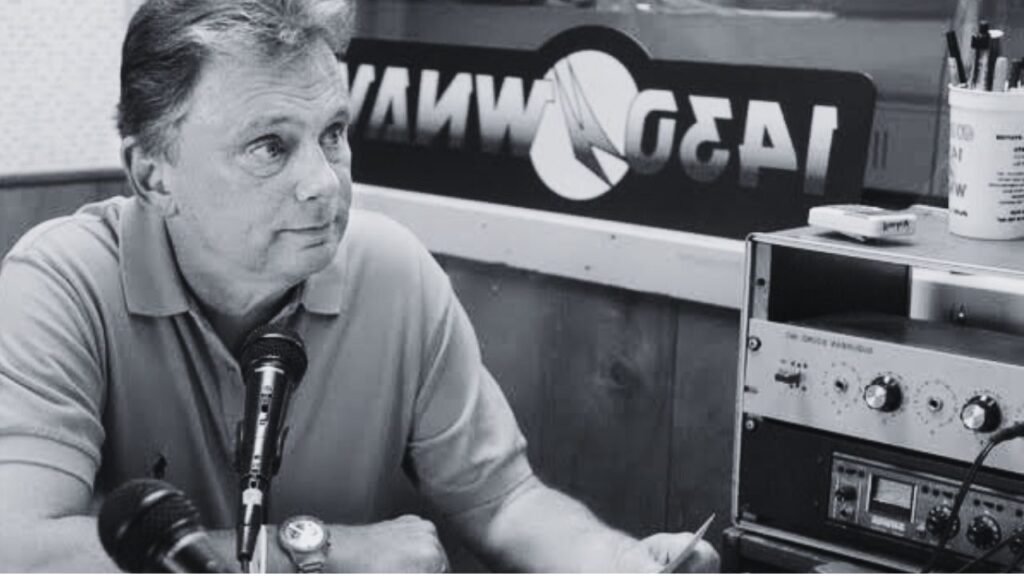
In 1977, he made the move to Los Angeles, joining KNBC-TV as the station’s primary weatherman. Local television in a major market was a significant step up, and the years at KNBC gave him exactly the kind of polished presence that network producers notice. By the time Wheel of Fortune came looking, Sajak was not a raw talent — he was an experienced broadcaster who had been working his way toward this moment for more than a decade.
How Merv Griffin Chose Pat Sajak for Wheel of Fortune
Wheel of Fortune was the creation of Merv Griffin, the entertainer and television producer who had an unusually sharp sense for what worked on daytime television. In 1981, Griffin selected Sajak to host the NBC daytime edition of the program. It was a decision that, in hindsight, looks obvious — but at the time, Sajak was still primarily known as a Los Angeles weatherman.
By that point, “Sajak” was already his professional name, a simplified version of his birth surname Sajdak. He would later make it his legal name. The cleaner spelling was easier for audiences and producers alike, and it stuck. The NBC daytime edition was his entry point into the franchise, but it was the syndicated version of the show that would eventually turn him into a household name across the country.
Four Decades as the Face of Wheel of Fortune
Few television hosts have sustained a single role for as long as Sajak did with Wheel of Fortune. His tenure spanned more than four decades — covering the rise of cable television, the fragmentation of broadcast audiences, and every shift in American pop culture that happened in between. Through all of it, the show remained a consistent presence in prime-time syndication, and Sajak remained the face of it.
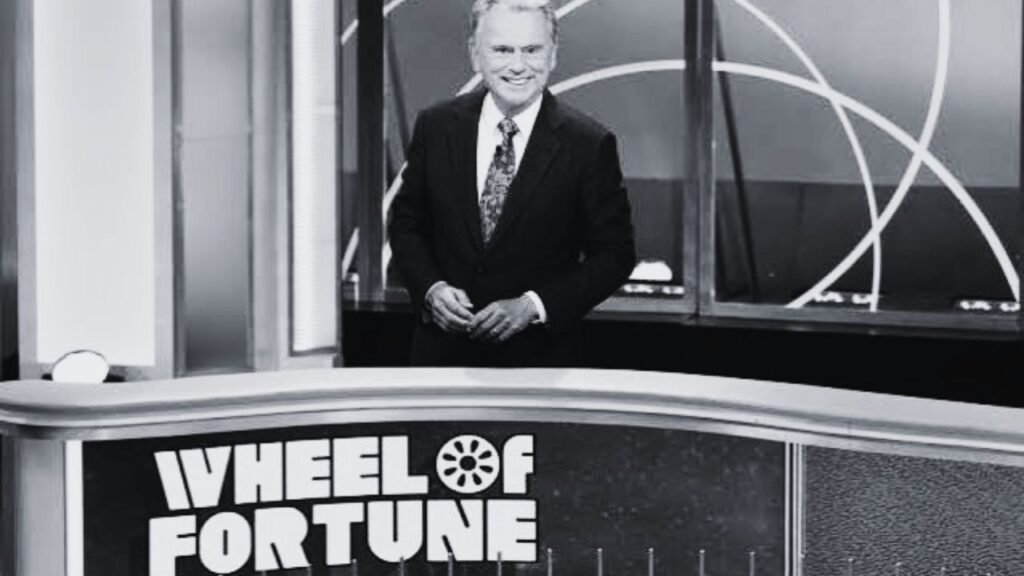
The recognition that came with the role was considerable. His honors include multiple Daytime Emmy Awards, a People’s Choice Award, and a star on the Hollywood Walk of Fame. In 2011, he received the Daytime Emmy Lifetime Achievement Award — an acknowledgment that his contribution to the format went beyond any single season or milestone.
Sajak did take on other projects during those years. He appeared in Airplane II: The Sequel and had a role in the daytime soap opera Santa Barbara, among other appearances. But those were diversions, not alternative careers. Wheel of Fortune was always the center of gravity.
In 2023, Sajak announced that he would step down from the hosting role after the following season. On June 7, 2024, his final regular episode aired. He did not walk away from the franchise entirely — he remained connected to it as a consultant, with reports indicating a three-year arrangement. The departure marked the end of an era for game show television, but not a clean break from the institution he had spent his professional life building.
Pat Sajak’s Wife and Children
Sajak married Lesly Brown in 1989, a union that has lasted through virtually the entire syndicated run of Wheel of Fortune. Their son, Patrick Michael James Sajak, was born in 1990, and their daughter, Maggie Sajak, was born in 1995. While Sajak’s professional life played out very publicly on a national stage, he kept his family life comparatively private — a deliberate contrast to the visibility that came with the job.

Maggie Sajak developed her own connection to Wheel of Fortune over time, appearing in association with the program in a more public capacity than her brother. Both children grew up during the years when their father was one of the most-watched hosts on American television.
A Career Built One Step at a Time
What makes Sajak’s story worth telling in full is how unassuming the early chapters were. There was no shortcut from Chicago’s West Side to a network hosting job. The path ran through Saigon, through Kentucky radio, through Nashville local news, and through Los Angeles weather forecasts before Merv Griffin made a phone call that changed everything.

For readers interested in the broader history of American broadcasting and the personalities who shaped it, resources like First Business Mag offer additional context on the media industry figures who built careers across that era.
By any measure, the four decades that followed Griffin’s decision were remarkable. Sajak became the kind of television presence that Americans absorbed without thinking much about it — familiar, consistent, dependable in the way that only a truly long-running program can make someone. When his final episode aired in June 2024, it closed a chapter in game show history that is unlikely to be repeated. Hosting a single program for more than forty years is not something the current television landscape makes possible, which means Sajak’s record may stand for a very long time.