

| Full name | Björn Kristian Ulvaeus |
|---|---|
| Born | April 25, 1945, Gothenburg, Sweden |
| Age | 79 |
| Nationality | Swedish |
| Profession | Singer, songwriter, guitarist, producer |
| Known for | ABBA; songwriting partnership with Benny Andersson; musicals Chess and Mamma Mia! |
| Spouse | Agnetha Fältskog (1971–1980); Lena Källersjö; Christina Sas (married September 2024) |
| Children | Linda Elin Ulvaeus, Peter Christian Ulvaeus, Emma Eleonora, Anna Linnea |
Björn Ulvaeus is one of the most commercially successful songwriters in popular music history, yet the full scope of his career is often overshadowed by ABBA’s peak years in the 1970s. He is far more than a member of a famous pop group. Over six decades he has worked as a performer, lyricist, record producer, and musical theatre creator — and his professional output has continued well past the era that made him famous.
His name is inseparable from that of Benny Andersson, his creative partner since 1966. Together they wrote every ABBA song, developed two landmark stage musicals, and eventually brought ABBA back into the studio for a new album nearly four decades after the group’s original recording run ended.
From Gothenburg to Västervik — Early Life and the Making of a Musician
Ulvaeus was born on April 25, 1945, in Gothenburg, Sweden, the country’s second-largest city. His family relocated to Västervik, a smaller coastal town, during his childhood — a move that would give him a quieter upbringing far from the urban music scenes of Stockholm or Gothenburg.
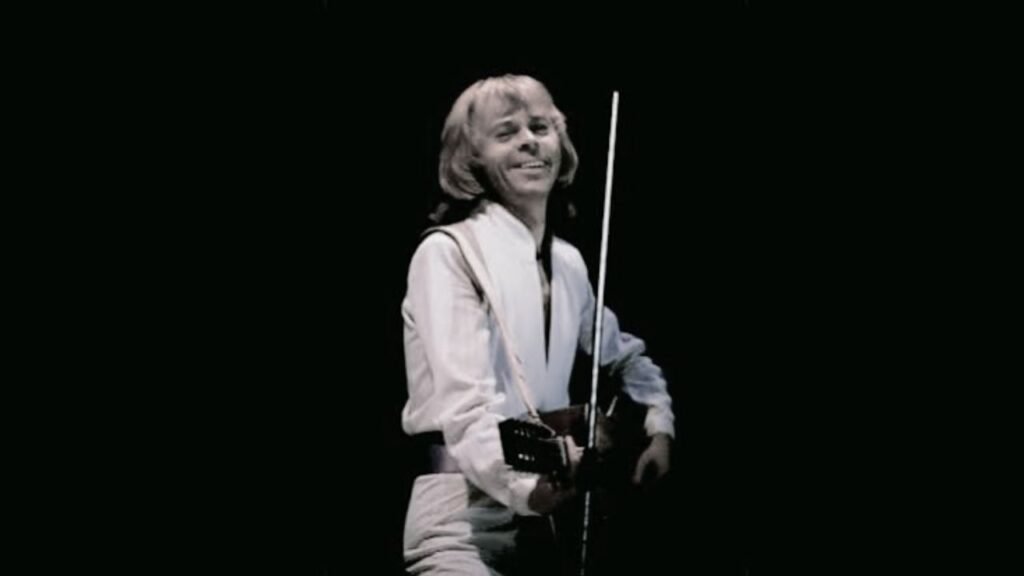
After completing military service, he went on to study business and law at Lund University. The academic path might suggest a career in commerce or the legal profession, and it is one of the more unexpected details in a biography so defined by music. He never completed that professional route. The pull of performing proved stronger.
The Hootenanny Singers and the Road to ABBA
Before ABBA existed, Ulvaeus built his performing credentials with the Hootenanny Singers, one of the most popular folk and schlager acts in Scandinavia during the 1960s. The group gave him years of experience on stage and in recording studios, developing the instincts for melody and audience appeal that would later define his songwriting.
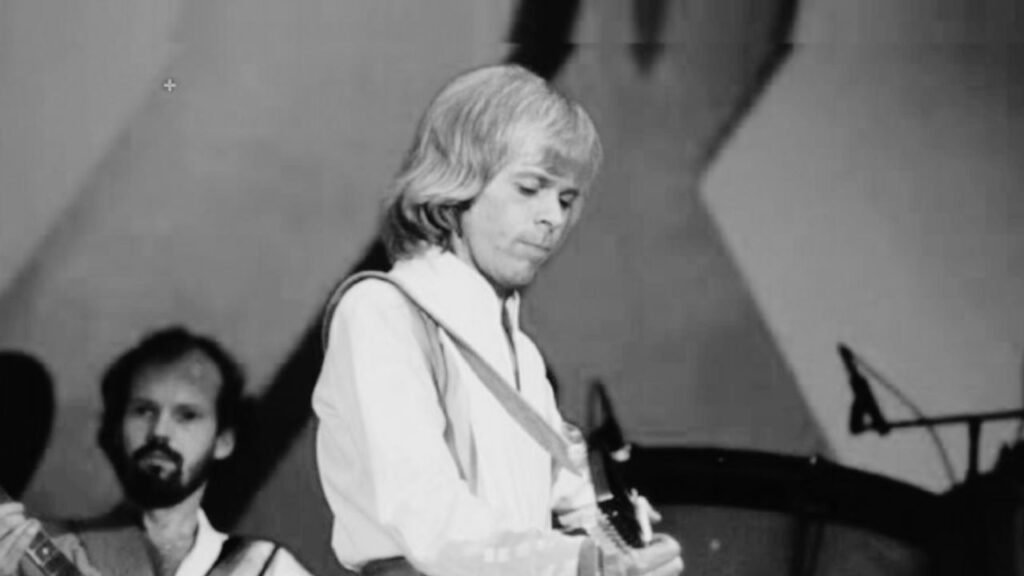
The moment that changed everything came in 1966. The Hootenanny Singers and a pop group called the Hep Stars were touring southern Sweden at the same time. Ulvaeus met the Hep Stars’ keyboard player: Benny Andersson. The two discovered an immediate creative chemistry and began writing songs together almost immediately. It was the start of one of popular music’s most productive partnerships.
The Ulvaeus–Andersson Partnership and the Architecture of ABBA’s Sound
When ABBA formed — completed by singers Agnetha Fältskog and Anni-Frid Lyngstad — Ulvaeus and Andersson became the group’s creative engine. They wrote and produced all of ABBA’s recorded material together. Presenting either man as the dominant force misrepresents how the partnership actually worked: it was genuinely collaborative, with neither routinely outranking the other.
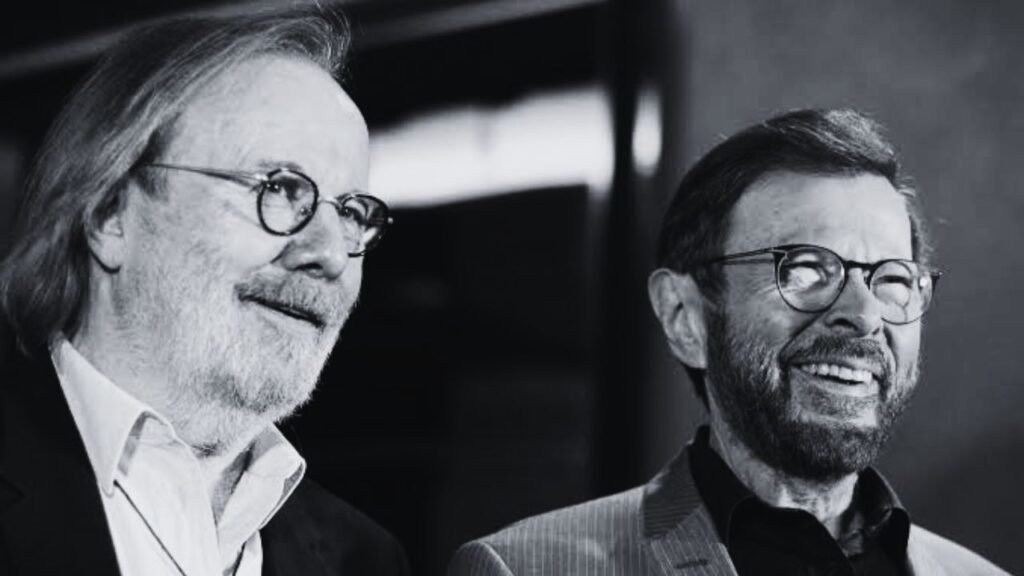
Ulvaeus’s specific contributions centred on lyrics, melodic structure, guitar playing and vocals. Andersson brought his keyboard work, harmonic instincts and production ear. The result was something neither produced alone, and it was transformed further by the distinctive voices of Fältskog and Lyngstad, whose vocal identities were as central to ABBA’s sound as anything written on paper.
The group’s international breakthrough came in 1974, when ABBA won the Eurovision Song Contest with “Waterloo.” The win gave them an immediate platform across Europe and beyond, and the recordings that followed — through the mid and late 1970s — made them one of the best-selling musical acts in the world. Songs such as “Dancing Queen,” “The Winner Takes It All,” “Fernando” and “Voulez-Vous” became genuinely global pop standards, not just chart hits of their moment.
Agnetha Fältskog, Family, and Life Inside ABBA
ABBA’s story has always been complicated by the personal relationships within the group. Ulvaeus married Agnetha Fältskog in 1971, before ABBA had achieved international recognition. Their daughter Linda Elin Ulvaeus was born on February 23, 1973, and their son Peter Christian Ulvaeus followed on December 4, 1977.
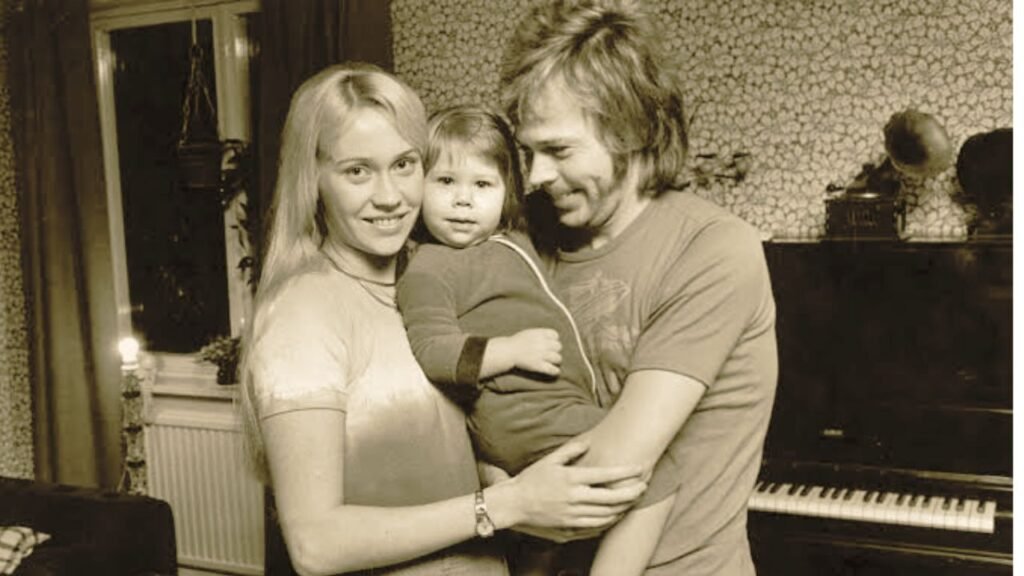
The marriage did not survive the pressures of the group’s success and the demands of constant touring and recording. Ulvaeus and Fältskog separated around 1979 and divorced in 1980. The song “The Winner Takes It All,” released that same year, is frequently connected to their divorce in popular accounts, though treating any specific lyric as straightforwardly autobiographical requires caution without direct confirmation from the songwriters.
What is well documented is that the divorce did not end ABBA. The group continued working professionally after the separation, with Ulvaeus and Fältskog maintaining their roles within it. The conflation of ABBA’s personal upheavals with its professional ending is a common oversimplification — the group’s activity wound down in the early 1980s for reasons that went beyond any single relationship.
Chess, Mamma Mia! and a Career Beyond the Band
Once ABBA’s original recording period ended, Ulvaeus did not step back from music. He and Andersson moved into musical theatre, collaborating with lyricist Tim Rice on Chess, a stage musical set against the backdrop of Cold War chess rivalry. The show premiered in London’s West End in 1986 and introduced the ballad “I Know Him So Well,” which became a substantial hit in its own right.
The larger theatrical venture came with Mamma Mia!, the jukebox musical built around ABBA’s catalogue. Ulvaeus was involved in its development as the show moved from concept to West End production, eventually opening in London in 1999. It became one of the longest-running musicals in theatre history, spawned two major film adaptations, and introduced ABBA’s songs to generations who had not been alive during the group’s peak years.
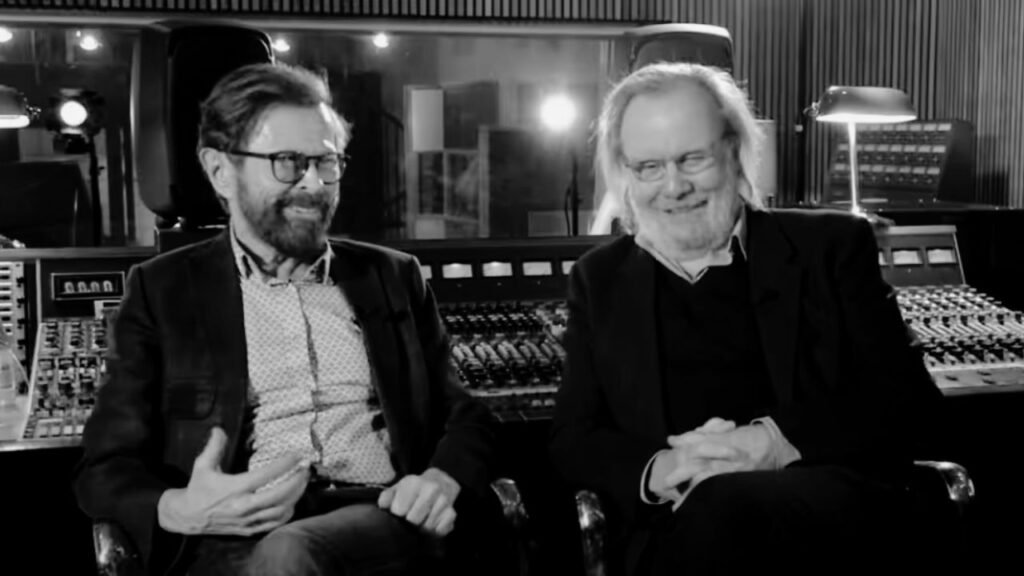
His work in this period demonstrated something that pure pop metrics can miss: the songs he co-wrote with Andersson had structural and emotional qualities that translated naturally to theatrical storytelling. That is not accidental — it reflects a craft developed over many years of songwriting that prioritised melody and narrative.
ABBA Voyage and the Return
In 2021, more than three decades after ABBA had last released a studio album, Ulvaeus and Andersson brought the group back. Voyage — written and produced by the two of them — was ABBA’s first new studio material in nearly 40 years. The album was received with genuine enthusiasm rather than mere nostalgia, a testament to how consistently the Ulvaeus–Andersson songwriting approach had held up.

Alongside the album came ABBA Voyage, a London concert experience unlike anything the group had previously done. Rather than performing physically on stage, the four ABBA members are represented by digital versions of themselves — sometimes referred to as ABBAtars — while a live band performs behind them. Ulvaeus was centrally involved in the project, which opened to strong reviews and has continued drawing audiences.
The production reflects the broader pattern of his career: finding new forms for existing work rather than simply replaying it. Readers interested in how music industry milestones connect to wider business trends can find further context through First Business Mag.
Later Life and Personal Milestones
After his divorce from Fältskog, Ulvaeus later married music journalist Lena Källersjö, with whom he had two daughters, Emma Eleonora and Anna Linnea. Reports from 2024 confirmed that he married Christina Sas in September of that year, described as his third marriage. He turned 79 in April 2024.
His career has now spanned more than six decades, from folk group touring circuits in 1960s Sweden to a digitally conceived concert in 21st-century London. Few songwriters from his generation have remained as actively involved in new creative work for as long, and fewer still have seen their earlier output take on a second and third life through theatre, film and live performance in new forms.
What runs consistently through the whole story is the partnership with Benny Andersson — a creative relationship that began in 1966 and has not meaningfully ended since. Most of what Ulvaeus has achieved at the highest level, he has achieved with Andersson beside him. That is not a diminishment of either man; it is simply how their best work has always been made.
Sources
- Encyclopaedia Britannica — Björn Ulvaeus biography
- Official ABBA biography of Björn Ulvaeus
- Official ABBA history — abbasite.com
- Yahoo News — Björn Ulvaeus on ABBA continuing after divorce
- Hello! Magazine — ABBA: Where Are They Now
- Smooth Radio — Agnetha Fältskog facts, husband and children
- Hello! Magazine — Björn Ulvaeus third wedding to Christina Sas