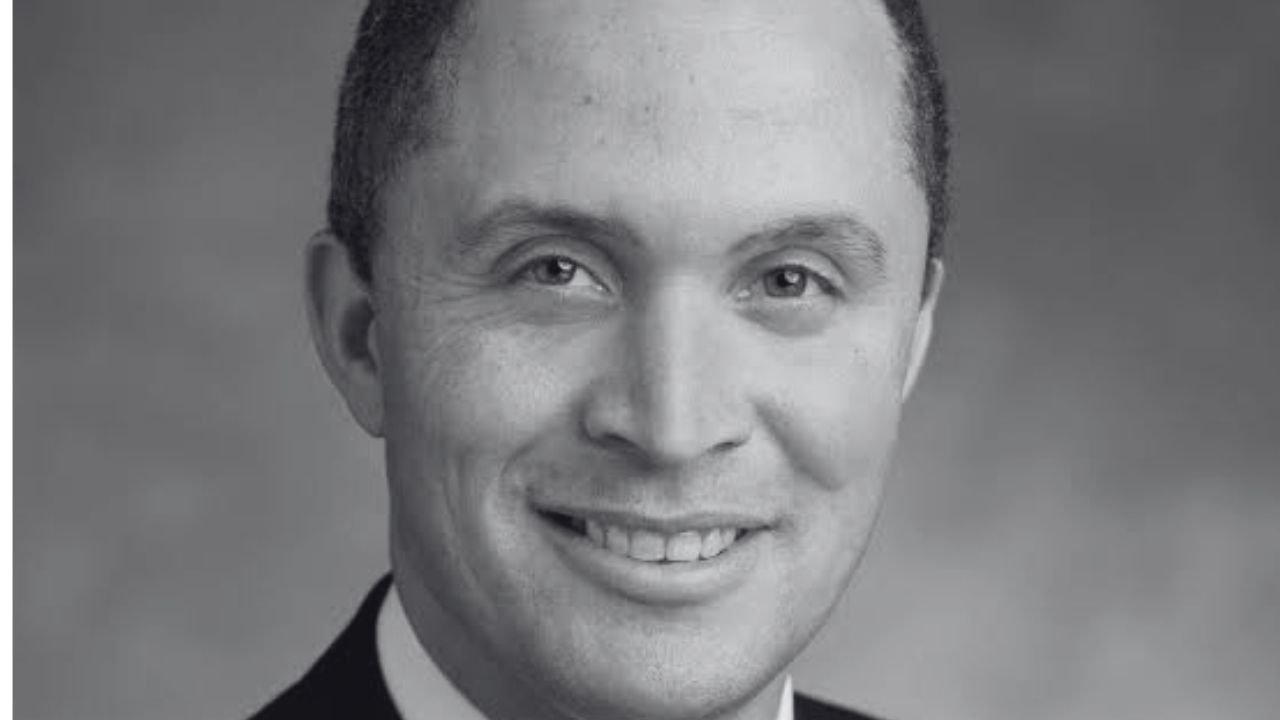

| Full name | Harold Eugene Ford Jr. |
|---|---|
| Born | May 11, 1970, Memphis, Tennessee |
| Age | 54 |
| Nationality | American |
| Profession | Financial executive, media contributor, former U.S. representative |
| Known for | Representing Tennessee’s 9th Congressional District (1997–2007); senior banking roles at PNC and Truist; Fox News contributor |
| Parents | Harold Ford Sr. and Dorothy Bowles Ford |
| Spouse | Emily Threlkeld |
| Children | Georgia; Harold III |
| Education | B.A., University of Pennsylvania (1992); J.D., University of Michigan Law School (1996) |
| Current role | Vice Chair, Wholesale Banking, Truist Financial Corporation |
Harold Ford Jr. has had at least three distinct public careers — congressman, Wall Street executive, and television commentator — and he has moved between them without fully leaving any behind. That combination makes him a harder figure to categorize than most former members of Congress, and it explains why his name surfaces in political debates, banking boardrooms, and cable news studios alike.
He was born on May 11, 1970, in Memphis, Tennessee, the eldest son of Harold Ford Sr. and Dorothy Bowles Ford. His story starts with one of the more prominent political families in modern Tennessee history, but it does not end there.
Memphis Roots and the Making of a Political Family
The Ford name carried real weight in Memphis long before Harold Jr. ever ran for office. His father, Harold Ford Sr., held Tennessee’s 9th Congressional District seat for 22 years, building a political legacy that made the family a fixture in the city’s Democratic politics. Growing up in that environment shaped Harold Jr.’s early ambitions in ways that were hard to separate from the family business of public service.
The family eventually relocated to Washington, D.C., where Harold Jr. attended St. Albans School, one of the capital’s most established private preparatory schools, graduating in 1988. The move to Washington placed him close to the workings of Congress from an early age — a proximity that would prove formative.
His mother, Dorothy Bowles Ford, is part of a family that built its reputation well beyond any single individual. Harold Jr. is the eldest of three brothers, with siblings Newton “Jake” Ford and Sir Isaac Ford rounding out the next generation of the Ford family.
Education and Early Steps in Public Service
Ford earned a bachelor’s degree from the University of Pennsylvania in 1992. He did not go directly to law school after graduation. Instead, he went to work, spending time as a staff aide to the Senate Budget Committee in 1992, then as a special assistant at the U.S. Department of Commerce in 1993. Those early roles gave him a working knowledge of federal policy machinery before he had any elected office to his name.

He returned to school and received his J.D. from the University of Michigan Law School in 1996 — the same year he ran for Congress. The sequence was deliberate: by the time he launched his campaign, he had a law degree, hands-on experience in the Senate, and a clear sense of the policy terrain he wanted to work in.
Five Terms in Congress
Ford was 26 years old when he won election to Congress in 1996, making him one of the youngest members of the House at the time. He succeeded his father in representing Tennessee’s 9th Congressional District, a seat centered on Memphis. He took office on January 3, 1997, and would go on to serve five consecutive terms, leaving on January 3, 2007.
His committee assignments placed him at the center of the policy areas that would later define his post-congressional career. He served on the House Financial Services Committee, the House Budget Committee, and the House Education Committee — a mix that kept him engaged with economic policy, federal spending, and workforce development throughout his time in the House.
Ford’s ideological positioning within the Democratic Party was notable. He was a member of the Congressional Black Caucus while also affiliating with the Blue Dog Coalition, the group of moderate and fiscally conservative House Democrats that formed in the mid-1990s. That combination signaled a willingness to work across conventional expectations and helped him hold a competitive seat in a district where he needed to build broad coalitions.
He chose not to seek a sixth term in the House in 2006. Instead, he ran for the U.S. Senate in Tennessee — a bid that attracted national attention but ultimately fell short. The loss closed out his elected political career, though it did not end his public life.
From Capitol Hill to Wall Street
After leaving the House in January 2007, Ford moved into financial services. He held senior leadership positions at Merrill Lynch and Morgan Stanley before joining PNC Bank, where he served as executive vice president and New York regional president. In that role, his focus was business development and managing client and community relationships across one of the country’s largest metropolitan markets.

The transition from legislator to banking executive was less of a leap than it might appear. Ten years on the House Financial Services Committee and Budget Committee gave Ford a detailed understanding of financial regulation, capital markets, and fiscal policy — exactly the kind of background that makes former congressional leaders attractive to major financial institutions.
In 2026, Ford joined Truist Financial Corporation as vice chair in its Wholesale Banking business. According to Truist, the role involves advising commercial, corporate, institutional, and high-net-worth clients and supporting the firm’s business development efforts. The move placed him at the senior level of one of the larger bank holding companies in the United States.
Alongside his banking work, Ford has also served as a visiting professor of public policy at the University of Michigan, New York University, and Vanderbilt University — institutions that span the academic worlds he moved through as a student and policy professional.
Media Work and Public Commentary
Ford joined Fox News as a contributor in 2021. Fox has also identified him as a rotating co-host of The Five, one of the network’s most-watched programs. His role there places him as a Democratic voice in a format built on political debate, a position that requires a different set of skills than committee hearings or banking client meetings but draws on the same comfort with policy argument that shaped his congressional career.

His continued media presence has kept him visible in national political conversations well after his elected career ended. For readers interested in following business figures who straddle finance and public affairs, outlets like First Business Mag regularly cover professionals navigating both worlds.
The Ford Family
Harold Ford Jr. is married to Emily Threlkeld. The couple has two children, Georgia and Harold III. His family life has remained largely private, in contrast to the very public decades he spent in elected office and on television.

His brother Newton “Jake” Ford is part of the same generation of a family whose name has been tied to Tennessee politics and public affairs for decades. The Ford family’s political history — anchored by Harold Sr.’s 22-year run in Congress and extended through Harold Jr.’s own decade in the House — represents one of the more sustained examples of family political succession in modern Southern politics.
That legacy is both an asset and a frame that Ford has spent much of his post-congressional career working beyond. His banking career and media work are on their own terms substantial, and they suggest someone who has deliberately built a second and third act rather than coasting on a family name.
At 54, with senior executive roles in wholesale banking, a national television platform, and a decade of congressional service behind him, Harold Ford Jr. remains one of the more genuinely multi-dimensional figures to emerge from the political generation that came of age in the 1990s.